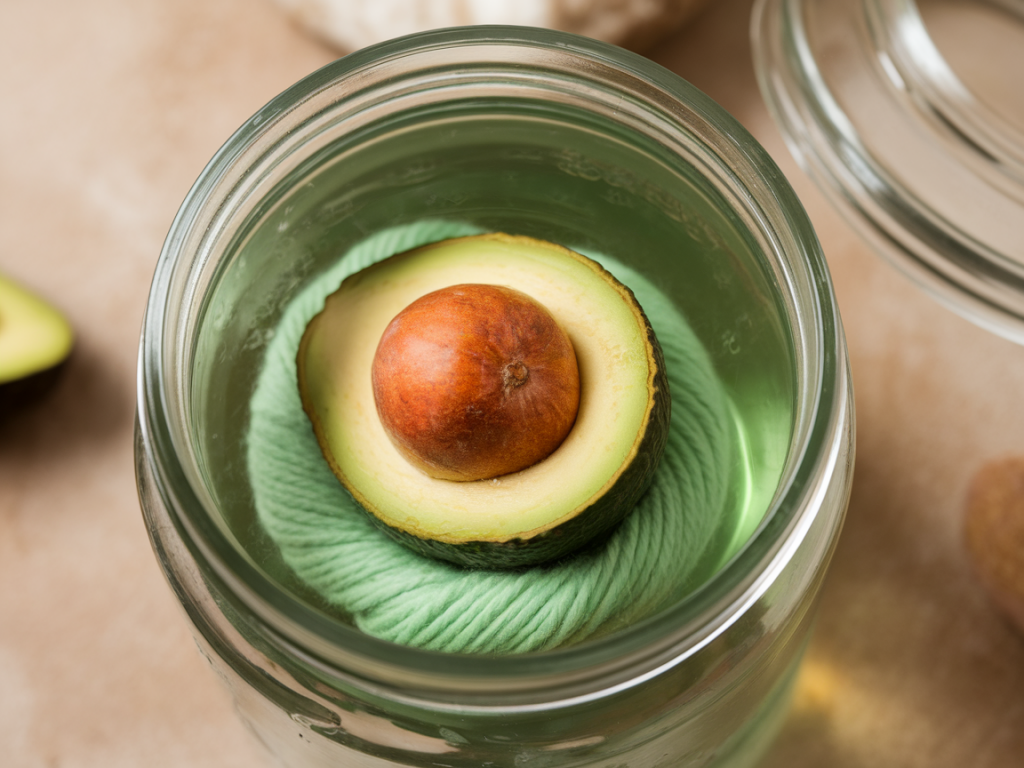
I wanted a small, soft cushion in warm, muted pinks to sit on my living-room armchair — something that felt lived-in and gentle, not fussy. I had a pile of avocado pits on the windowsill from a week of breakfasts and a skein of undyed British wool leftover from a thrifted jumper makeover. It felt like an obvious test: could avocado pits dye wool quickly enough for a small cushion project, and would the colour live up to the cosy, sustainable look I aim for on Take Root Design?
Why avocado pits?
Avocado pits are a lovely little natural dye source: available, free, and rich in tannins that can give soft pinks, peach, or browned shades depending on how they’re treated. They’re one of those pantry-scrap dyes that fit my ethos — low waste, cheap, and pleasant to experiment with. But they do have limitations: they’re not the most lightfast, and results can vary a lot depending on mordant, time, and water.
What I tested
I tested three recipes for a small cushion front (approximately 30 x 30 cm), using 100 g of undyed British wool (DK weight). I wanted options that would fit into a weekend project as well as a slightly slower overnight method. I used alum as a mordant (common, relatively mild) and an iron modifier for one sample to see how it shifted the tone.
| Recipe | Pit quantity | Mordant | Method | Expected tone |
|---|---|---|---|---|
| Quick stovetop (2 hours) | 6–8 pits (chopped) | 10% alum (by weight of fiber) | Simmer 90–120 min | Warm peachy-pink |
| Overnight soak + simmer | 8–10 pits (chopped) | 10% alum | Soak 12–16 hrs, simmer 60 min | Slightly deeper rose |
| Overnight + iron modifier | 10 pits | 10% alum + 1% iron (as ferrous sulfate) | Soak overnight, simmer 60 min, add iron bath | Warm grey / muted mauve |
Materials and prep notes
Supplies I used:
Important safety/housekeeping: aluminium and iron salts are common in natural dyeing, but I wear gloves, don’t breathe powders, and keep dye pans off cooking equipment I’ll use for food later. I also test on a small swatch first.
Step-by-step: my quick stovetop recipe
This is the fastest route if you want a cushion made within a day.
Result: soft peachy-pink, slightly uneven (which I like). Yield was warm and muted; perfect for a raw, natural-looking cushion front.
Overnight soak method (deeper colour)
My overnight method involves soaking the pits with the yarn so tannins can extract slowly. I soaked 8–10 chopped pits with the washed, mordanted yarn in cool water for 12–16 hours, then brought everything to a simmer for 60 minutes. This gave a slightly deeper, more consistent rose than the quick method, with less mottling.
Iron-modified sample (muted, vintage grey)
Avocado plus iron gives a beautiful vintage grey-mauve. I added ferrous sulfate at a low concentration (1% of fiber weight) to the cooled dye bath and left it for 30 minutes before rinsing. The result was a delicate, dusty grey with mauve undertones — great if you prefer a more neutral cushion that still has warmth.
Lightfastness and wear — what I found
I keep things real: avocado pinks are not the most lightfast natural dyes. I tested samples on a window seat that gets morning sun and on a cushion placed under a lamp indoors.
So the practical takeaway: avocado-dyed items are best used in lower light, or as accents that won’t live in direct sun. If you want better lightfastness, consider overdying with a more stable natural dye (e.g., indigo for blue tones, walnut for warm browns) or using the avocado piece inside a cushion with a protective outer fabric.
How I turned the yarn into a small cushion
I knitted a simple 30 x 30 cm cushion front using the dyed skein, lined it with an offcut of cotton to protect the inner filler from dye transfer, and sewed a plain backing from a thrifted linen shirt. For daily life I recommend:
Final practical tips
If you try this, I’d love to see your results — send a photo or a note via the contact page on takerootdesign.co.uk. I find joy in small, imperfect makeovers, and avocado-dyed cushions are one of those quiet, sustainable projects that bring subtle colour and personality to a room.