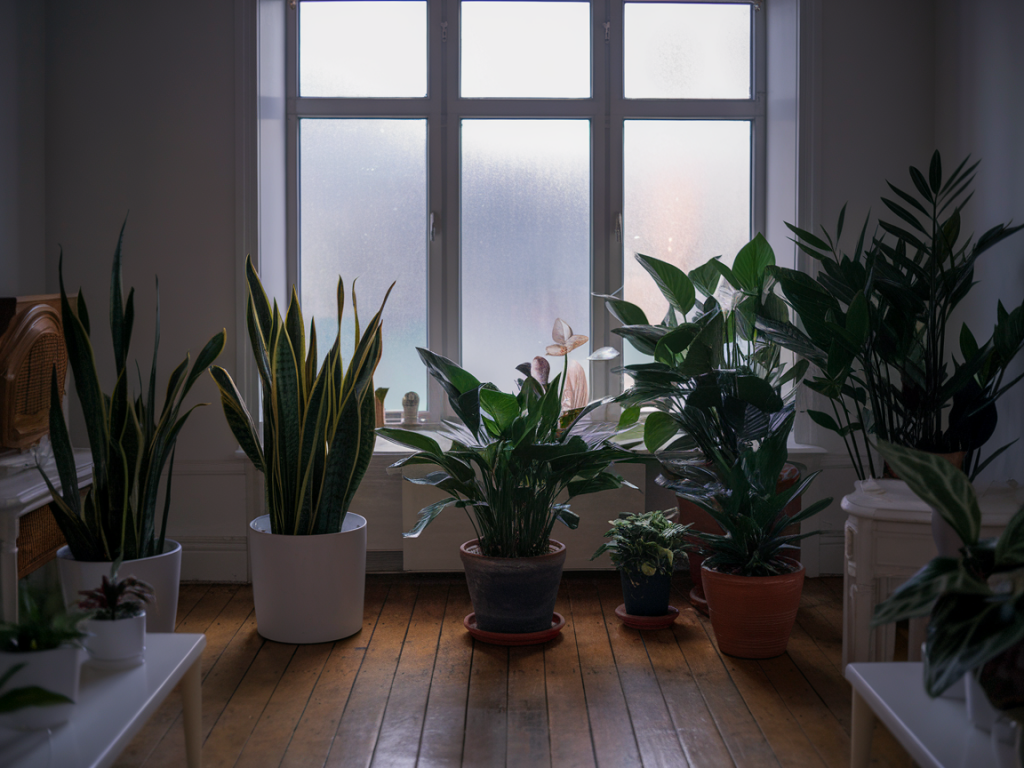
I’ve long believed that a few well-chosen plants can transform a chilly, north-facing room into a softer, more breathable space. Over the years I’ve tested dozens of budget-friendly houseplants in my own north-facing sitting room and in workshops, so I wanted to share the ones that genuinely raise local humidity and cope with low light — without demanding a greenhouse of attention.
Why choose plants for humidity in a north-facing room?
North-facing rooms are lovely for avoiding glare and keeping colours soft, but they’re often cooler and darker. That can mean dry air in winter and slow-growing houseplants. I look for species that: release noticeable moisture through transpiration, tolerate low light, and are inexpensive or easy to propagate. The goal isn’t to match a tropical conservatory but to add a steady humidity boost around seating areas, houseplant clusters, or near a desk.
How I test humidity-boosting claims
When I try a plant, I place a small hygrometer near it and compare readings over several days under normal household conditions — no humidifiers, windows closed, heating as usual. I also check growth, leaf condition, and whether the plant sulks in low light. A few practical tests I recommend if you want to try this at home:
Budget-tested plants that actually raise humidity and survive low light
Below are my tried-and-true picks. These are usually available cheaply at supermarkets, Ikea, B&Q, or local garden centres, and they’re great for north-facing rooms.
- Spider Plant (Chlorophytum comosum) — a classic for a reason. Thrives in low to medium light, tolerates irregular watering, and its vigorous foliage transpires well. I’ve kept spider plants in a north window and seen a 2–4% local humidity rise in small clusters.
- Pothos / Epipremnum aureum — glossy leaves, very forgiving. Variegated varieties need slightly more light, but the solid green types do fine in north light. They’re great trailing plants that release steady moisture from lots of leaf surface area.
- ZZ Plant (Zamioculcas zamiifolia) — slower transpiration than some, but excellent in very low light and nearly indestructible, so good if you forget watering. It won’t spike humidity massively but contributes to a group effect.
- Peace Lily (Spathiphyllum) — one of the best low-light humidity boosters. It flowers in low light and transpires more when actively growing; downside is it prefers more consistent moisture and can be slightly fussier, but still affordable.
- Boston Fern (Nephrolepis exaltata) — brilliant for humidity if you can keep it happy. True low-light tolerant ferns are a bit more high-maintenance (they like moist soil and higher humidity), but even a small Boston fern in a north room noticeably bumps humidity when healthy.
- Cast Iron Plant (Aspidistra elatior) — superb for very dark corners. Slow-growing and tough; not a heavy water-releaser but contributes to a planted grouping where other plants can do the heavier lifting.
- Chinese Evergreen (Aglaonema) — handles low light gracefully and has ample leaf area for transpiration. Many attractive varieties are inexpensive and reliable.
Quick comparison table — low-cost picks
| Plant | Approx. cost (UK) | Low-light tolerance | Humidity effect | Care level |
|---|---|---|---|---|
| Spider Plant | £5–£15 | High | Medium | Low |
| Pothos | £4–£12 | High | Medium | Low |
| ZZ Plant | £8–£20 | Very high | Low | Very low |
| Peace Lily | £8–£20 | Medium | High | Medium |
| Boston Fern | £6–£25 | Medium | High | Medium–High |
| Cast Iron Plant | £10–£30 | Very high | Low | Low |
| Chinese Evergreen | £7–£25 | High | Medium | Low–Medium |
Placement and grouping tips that make a real difference
Plants raise humidity locally — the closer you are to a cluster, the more noticeable the effect. I recommend:
- Grouping three to five plants on a side table or plant stand rather than spreading single pots around the room.
- Placing plants near seating and desks where you want the humidity to be higher.
- Putting plants on risers or stands at different heights to create microclimates — moisture tends to linger around leaves and evaporates slowly in cooler north-facing rooms.
Easy humidity-boosting hacks with low-cost plants
If you want a boost without a big outlay, try these low-effort options I use often:
- Pebble tray: Place a shallow tray filled with pebbles and water under a pot (pot base sits on pebbles, not in water). It increases local humidity as water evaporates — ideal for ferns and peace lilies. I often use thrifted ceramic dishes for this.
- Group plants together: I typically cluster plants on a shelf or near a radiator (not directly on it). The collective transpiration can raise nearby humidity by several percent.
- Regular misting: Quick and free, though effects are short-lived. Good for Boston ferns and peace lilies between waterings.
- Use a low-cost digital hygrometer: I keep one near my plant cluster to track real changes. They’re inexpensive on Amazon or in garden centres and help avoid over-watering.
Common mistakes and how to avoid them
People often overwater to try to boost humidity, which leads to root rot. A few rules from my own trial-and-error:
- Feel the soil before watering — many low-light plants prefer to dry slightly between waterings.
- Avoid letting pots sit in standing water (except for pebble trays, where the pot base remains dry).
- Don’t expect one plant to change room humidity dramatically; focus on clusters and the right species combination (e.g., peace lily + spider plant + pothos).
Where to find affordable plants in the UK
I buy most of my budget plants from: Ikea (low-cost, reliable stock), local garden centres (support small businesses and often healthier plants), supermarkets (Aldi and Lidl sometimes have great seasonal deals), and online sellers like Crocus or Patch Plants when there’s a sale. I also propagate from friends — pothos and spider plants are especially easy to multiply.
If you’d like, I can share a simple care schedule for any of these plants or a shopping list based on room size and how much humidity increase you’d like to achieve. Tell me your room dimensions and how much natural light you actually see across the day, and I’ll recommend a tailored cluster plan and estimated budget.