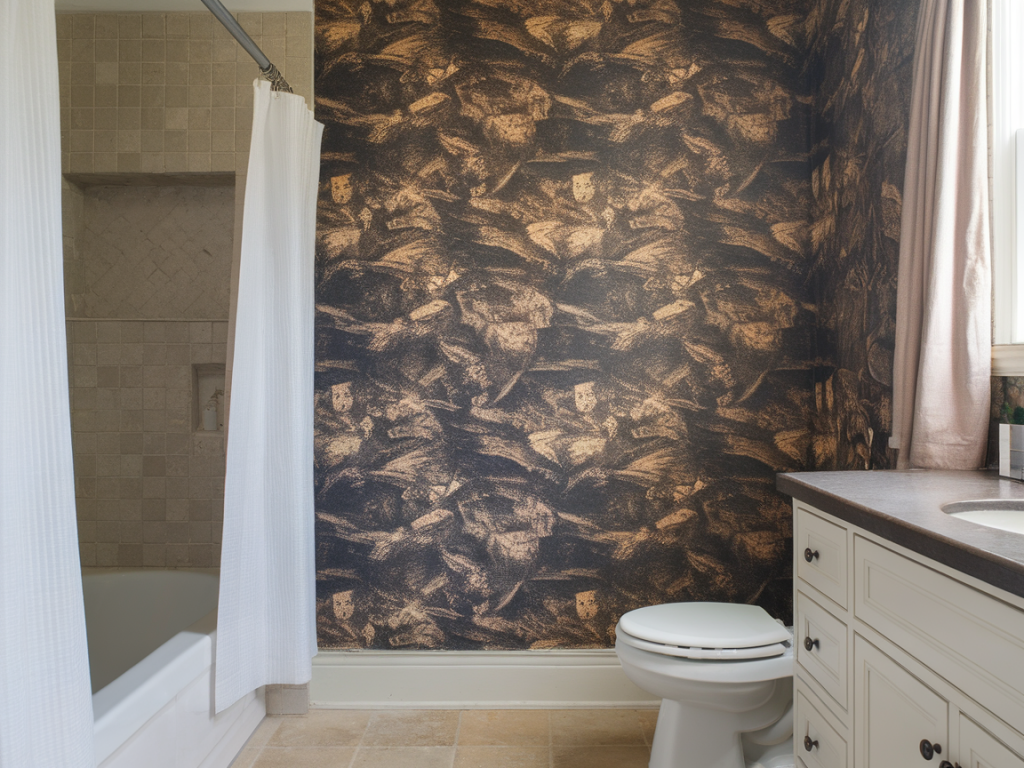
I first fell for cork years ago while foraging for natural textures to warm up a small bathroom in my flat. Its honeyed tones and subtle texture feel instantly cozy and grounded—perfect for the kind of lived-in, sustainable interiors I love. But cork and bathrooms is where romance meets practical reality: cork is breathable and sustainable, but it’s also a natural, porous material that doesn’t love constant damp. In this post I’ll walk you through what I’ve learned testing cork wallpaper in humid rooms: when it can work, how to install and seal it properly, realistic lifespan expectations, and alternatives if your bathroom is very damp.
Is cork wallpaper suitable for damp bathrooms?
Short answer: sometimes. Cork wallpaper can be a practical low-waste option for bathrooms that have good ventilation and are not subject to constant splashing or condensation. It’s great for half-baths, cloakrooms, or as a feature wall away from showers and baths. In very wet areas I wouldn’t rely on cork alone without careful sealing and maintenance.
Here’s why: cork is naturally water-resistant to a degree thanks to the presence of suberin (a waxy substance in the cell walls), and it’s breathable—so it helps regulate moisture rather than trapping it. That breathability is an advantage for low-waste, healthy interiors. But untreated cork will absorb water over time, darken, warp, or even encourage mildew if ventilation is inadequate.
Types of cork wallpaper and what to look for
Not all cork wallcoverings are the same. There are a few common types:
- Cork veneer sheets — thin slices of real cork glued to a backing (paper, vinyl): authentic look, can be sanded/finished, but backing affects moisture resistance.
- Cork wallpaper rolls — engineered wallcoverings that look like cork, sometimes with vinyl or non-woven backing: often easier to hang and sometimes more water-tolerant.
- Cork tiles — thicker tiles glued directly to the wall: good for impact resistance and can be sealed well but require more effort to fit around plumbing.
If I’m shopping, I look for: real cork veneer (for authenticity), a stable backing (non-woven or vinyl can add durability), and manufacturer guidance for bathrooms. Brands I’ve tried or researched include Amorim (for sustainable cork products), Wall&Decò (decorative wallcoverings with cork-effect options), and smaller European makers like Corksribas for genuine cork sheets. Always check the product specs for recommended use areas.
Preparing the bathroom: ventilation and substrate
Before thinking about installation, check ventilation. Mechanical extraction (an extractor fan that vents outside) and a sensible window routine reduce condensation far more than any perfect sealant. If your extractor is ineffective or you have no fan, cork wallpaper will likely be a poor long-term choice.
Substrate matters: cork adheres best to smooth, clean, dry, and stable surfaces. Plasterboard, well-prepared plaster, or a sealed cement board are ideal. Tile can work if you prime it properly (a good bonding primer is essential).
Installation steps I follow
Here’s my usual process when installing cork wallpaper in a bathroom feature area (not directly in the shower):
- Measure and acclimatize: leave the cork rolls/tiles in the bathroom for 24–48 hours so they adapt to the room’s humidity and temperature.
- Prepare the wall: repair and smooth any imperfections, remove dust, and apply a suitable primer if the surface is porous. For tiles, a primer specifically for glossy surfaces is best.
- Cut panels carefully: use a sharp knife and straight edge. For tiles, dry-fit before gluing.
- Use the right adhesive: for cork veneer or tiles, a flexible contact adhesive or a manufacturers’ recommended adhesive works best. Apply evenly and press firmly (a wallpaper seam roller helps).
- Trim and finish: tidy edges with a sharp blade and use trims where the wall meets wet zones—aluminium or thin timber trims can protect vulnerable edges.
Sealing: how to protect cork without losing its look
Sealing is the difference between cork that lasts and cork that fails in a bathroom. You want a finish that repels splashes, reduces staining, and still allows some moisture exchange (so the cork can “breathe”). Options I use or recommend:
- Water-based polyurethane — offers good water resistance and dries clear without yellowing. Choose a low-VOC, satin or matte finish to keep the natural look. Apply 2–3 thin coats.
- Penetrating oil finishes (e.g., tung oil or eco-friendly hybrid oils) — these nourish the cork and provide moisture resistance, but won’t be as durable against heavy splashes as polyurethane. Reapply annually or as needed.
- Hybrid varnishes or acrylic sealers — some are breathable yet water-resistant; check manufacturer data for suitability on cork and humidity tolerance.
- Edge sealing with silicone or trim — where cork meets a shower screen or basin, use a thin bead of sanitary silicone or protective trim to prevent water ingress behind the cork.
Application tips: sand lightly between coats with very fine grit to maintain a smooth finish; always test your chosen product on a scrap piece to check colour change; and ensure good ventilation while the sealer cures.
Maintenance and cleaning
Cork is low-maintenance if properly sealed. I clean with a damp (not wet) cloth and a mild soap when needed. Avoid abrasive cleaners or heavy-duty scouring pads. For small scratches or marks, a light sanding and recoat of the finish will refresh the area—this repairability is one reason I like cork for long-term, sustainable interiors.
Realistic lifespan
Lifespan depends on location and care. In a well-ventilated bathroom as a splash-free feature wall, sealed cork can last 8–15 years or more with periodic maintenance. In a high-moisture, frequently wet zone (inside a shower enclosure), expect much shorter life unless you use high-spec waterproofing systems and regular upkeep.
Quick product comparison
| Product type | Bathroom suitability | Pros | Cons |
|---|---|---|---|
| Cork veneer (real cork on backing) | Feature walls, away from direct splash | Authentic look, repairable, sustainable | Needs sealing, vulnerable at edges |
| Cork wallpaper (vinyl-backed) | Better near moisture, easier to hang | More water-tolerant, simpler install | Less natural feel, may off-gas if not eco-rated |
| Cork tiles | Away from showers; good for backsplashes | Durable, thicker, can be sanded | More work to install, seams need sealing |
Alternatives if your bathroom is very damp
If your shower or bathroom is constantly humid and ventilation can’t be improved, consider these lower-risk options that still give a warm, natural look:
- Tiles with cork-look finishes (porcelain or ceramic). They mimic the look but are waterproof.
- Waterproof vinyl wall panels printed with cork texture—cheap, durable, and easy to clean.
- Painted limewash or clay paint in warm tones combined with cork accents away from wet zones.
Using cork as a trimmed detail (shelf backing, framed panels, or cabinet fronts) rather than full-wall cladding lets you enjoy the texture while protecting it from moisture.
To finish, if you love the feel of cork and want a sustainable, cozy bathroom update, focus on the combination of the right product, conscientious sealing, and good ventilation. When these boxes are ticked, cork can be a beautiful, low-waste choice that ages gracefully and is straightforward to maintain—just be realistic about where it’s used and plan for occasional touch-ups.