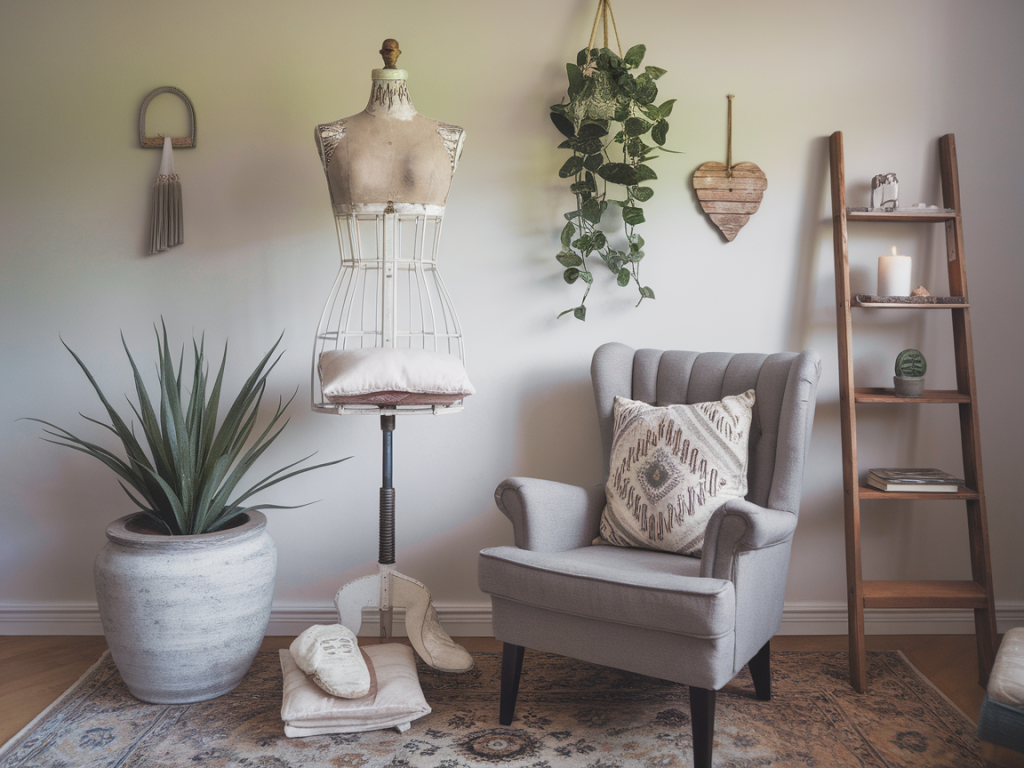
I love creating cosy corners — small, personal spaces where a good book, a warm blanket and a cup of tea feel like everything you need. Over the years I’ve learned that you don’t need to spend a fortune to carve out a hygge reading nook. In fact, some of my favourite finds have come from charity shops and thrift stores, and with a little patience and a bit of DIY you can create a truly lovely spot for under £100.
Why charity shops?
Charity shops are treasure troves for hygge-style decor because they often stock well-made, characterful pieces at tiny prices. I look for solid chairs, small side tables, lamps, and textiles. Vintage and preloved items have a craftsmanship and warmth that new mass-produced items can’t replicate — and buying secondhand is kinder to the planet. Plus, the thrill of a great find is half the fun.
My plan: what I wanted from my nook
Before I started hunting, I set a few simple goals so my purchases would be focused:
- Comfort — a proper place to sit that invites lingering
- Light — a warm reading lamp rather than harsh overhead lighting
- Texture — layers of textiles to add warmth and softness
- Simplicity — a calm, neutral palette so the space feels restful
- Budget — keep everything under £100
Where I shopped
I visited two local charity shops (British Heart Foundation and a small independent shop), a car boot sale, and the online listings on Facebook Marketplace and Freegle. I find it helpful to check weekly so I can pounce when something good appears. I also signed up for the charity shop newsletters in my area — sometimes they restock vintage lamps and mid-century chairs and will share them first.
What I bought (and why)
Here’s what I found and how I used each piece. I’ll include the approximate price next to each item so you can see how it adds up.
- Soft armchair (charity shop) — £25. I found a small, comfy armchair with sprung cushions. It needed a deep clean and a patch of upholstery repair, but the frame and shape were perfect for curling up.
- Brass table lamp (charity shop) — £8. A lamp with a warm-toned bulb makes a huge difference to hygge. I rewired the lamp with a braided cloth cable (DIY) and added an LED warm bulb (2700K).
- Small wooden side table (car boot sale) — £6. A low side table to rest a cup and book. Solid wood with simple lines; I gave it a light sanding and a beeswax rub to bring out the grain.
- Throws and cushions (mixed charity finds) — £15 total. Two chunky throws (one wool, one cotton) and a textured cushion cover. These are the layers that make a nook feel inviting.
- Houseplant (market stall) — £5. A small, easy-care plant (like a pothos or snake plant) brings life without needing much fuss.
- Secondhand rug (Freecycle/pick-up) — Free. A small woven rug picked up for free — I laundered and spot-cleaned before placing it under the chair.
Budget breakdown
| Item | Source | Approx. cost |
| Armchair | Charity shop | £25 |
| Brass table lamp + bulb | Charity shop + hardware store | £8 |
| Side table | Car boot sale | £6 |
| Throws & cushions | Charity shop | £15 |
| Houseplant | Market stall | £5 |
| Rug | Freecycle | £0 |
| Total | £59 |
Simple refurbishments I did
To make preloved items feel special and cohesive, I do a few low-cost updates:
- Deep clean upholstery — I use a handheld fabric steamer and an upholstery cleaner for spot stains. For stubborn marks, a dilute solution of white vinegar and water helps.
- Sanded and waxed wood — For the side table I sanded lightly and rubbed with a natural beeswax polish (I already had it at home).
- Rewire and braid — For the lamp I replaced frayed wiring and added a braided cord for a more tactile look. If you’re unsure about rewiring, get an electrician to check it.
- Patch and restuff cushions — A small seam repair and a handful of extra polyester filling can revive flat cushions.
Styling tips to maximise coziness
Hygge isn’t about clutter — it’s about considered comfort. Here’s how I styled my nook so it feels warm and inviting without being fussy:
- Layer textures: Mix a chunky knit throw, a soft cotton blanket, and one textured cushion. Different textures catch the light and feel tactile.
- Warm light: Use a 2700K warm LED bulb in your lamp. Add a small candle (or a safe LED candle) on the side table for intermittent glow.
- Keep a small stack of books: I keep three to five favourites on the table — not a whole library. Rotate them with the seasons.
- Add a personal item: A small framed photograph, a simple vase with a single dried stem, or a handmade ceramic mug makes the space feel like yours.
- Position near natural light: If possible, put the chair close to a window. Natural light for daytime reading and the lamp for evenings is the perfect combo.
Quick DIY: simple linen cushion cover
If you want a custom look, a basic cushion cover is an easy sew. I use old linen tablecloths or pillowcases from charity shops:
- Cut fabric to size with 2cm seam allowance.
- Sew three sides, insert cushion, then either sew the final side closed or add a simple envelope overlap.
- No sewing machine? A fabric glue or iron-on hemming tape works for a quick cover.
Care and longevity
To keep your nook looking fresh:
- Rotate cushions and throws to prevent wear.
- Give textiles a regular shake and spot clean stains promptly.
- Dust and wipe lamps and tables weekly — a soft cloth and a little olive oil on wooden surfaces will preserve the finish.
Creating a hygge reading nook from charity shop finds is about patience and imagination. I enjoy the slow process: browsing, rescuing, repairing, and arranging each element until the corner reads like a curated, lived-in space. It’s also deeply satisfying to make something beautiful and comfortable without spending much — and with a much smaller environmental footprint.