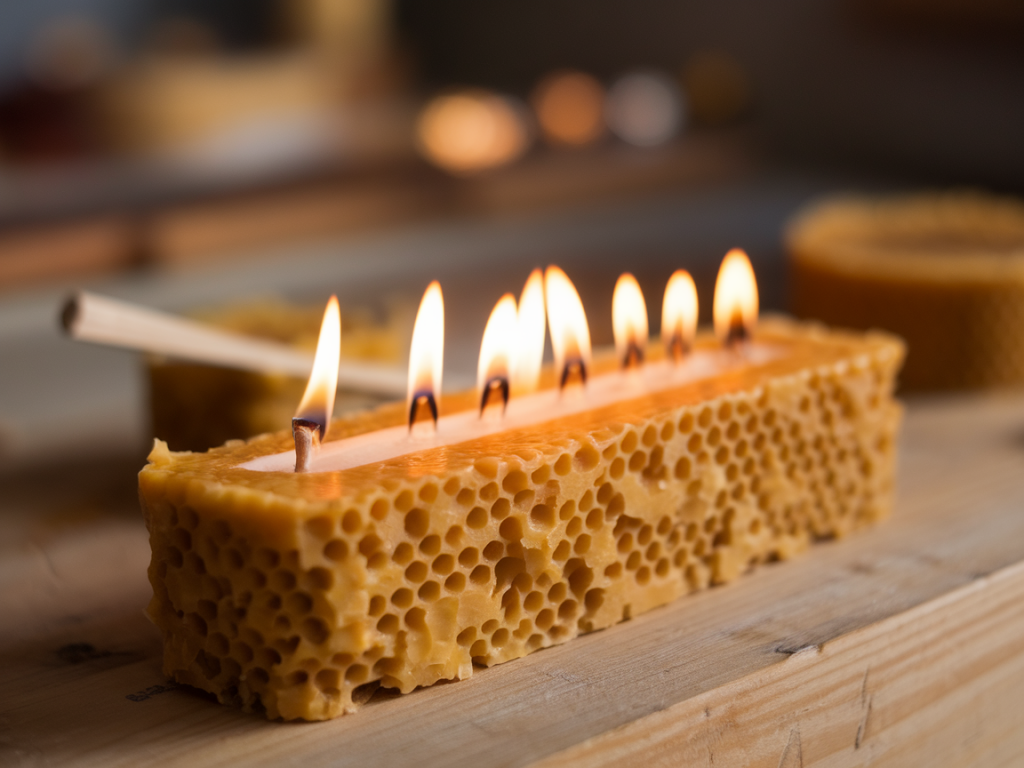
I love using leftovers — it feels frugal, friendly to the planet, and a little bit magical. Over the years I've collected small amounts of beeswax from jar-top drips, remnants of block waxes, and stale soy blend candle offcuts. I started experimenting to see whether I could turn those scraps into beautiful, long-burning new candles. The short answer is yes — but with a few caveats. In this post I’ll walk you through what works, what doesn’t, and a step-by-step mix and wick guide so your recycled candles burn cleanly and slowly.
Why mix beeswax and soy — and when to avoid it
Beeswax and soy are both lovely for different reasons. Beeswax is dense, burns slowly, and naturally smells faintly honeyed. Soy is softer, takes fragrance well, and is plant-based. Mixing leftover beeswax with soy blends can give you a more economical wax that still burns relatively long and clean. It’s a great way to reduce waste and make use of small quantities that alone wouldn’t be practical.
That said, avoid mixing if your leftovers contain unknown additives (colours, heavy fragrance oils that have gone off, or paraffin). Also be cautious with very old wax that smells rancid — it might impart off-odours to the new candle. If in doubt, do a small test melt and sniff.
Basic principles: melting points, hardness and wick size
Understanding these three things will save you hours of frustration:
- Melting point: Beeswax melts around 62–65°C (144–149°F). Soy waxes vary widely—soft container soy blends often melt around 50–60°C. When mixed, your blend's working temperature will depend on proportions.
- Hardness: Beeswax is hard and contributes to a firmer container wax; too much soy can make the candle soft and cause tunnelling or uneven burning.
- Wick size: The denser the wax, the thicker the wick generally needs to be. A beeswax-rich mix often requires a larger wick than pure soy.
Materials and tools I use
Here’s a practical list — most of these are things I already had in my home studio:
- Leftover beeswax (block pieces, jar drips) — cleaned of debris
- Soy blend wax remnants (container wax scraps, votive leftovers)
- Double boiler or a heatproof jug set into a pan of simmering water
- Kitchen thermometer
- Glass jars or tins for candles
- Wicks and wick stickers or a dab of hot glue
- Pouring jug and a stirring utensil
- Optional: fragrance oil (phthalate-free), dye chips, and a scale
Test small and scale up
I always recommend running small test batches first — 100–200g is plenty. It lets you try different ratios, wick sizes, and fragrance loads without wasting material. In my trials I used 50g beeswax + 50g soy blend as a starting point and adjusted from there.
Suggested mix ratios and expected behaviour
Below is a table I use as a starting reference for leftover mixes and wick sizing. These are approximations — testing is essential.
| Beeswax : Soy blend | Texture / Hardness | Typical wick size (cotton/core) | Notes |
|---|---|---|---|
| 100 : 0 | Very hard, slow burn | Large (e.g. ECO 10 or similar) | Strong natural honey scent, high melt point |
| 75 : 25 | Firm, long burn | Medium-large (ECO 8–10) | Good balance; minimal tunnelling |
| 50 : 50 | Moderately firm | Medium (ECO 6–8) | Much easier to pour; holds fragrance well |
| 25 : 75 | Softer, closer to container soy | Small-medium (ECO 4–6) | May need additives (stearic acid) for firmness |
| 0 : 100 | Standard soy container | Small (ECO 2–4) | Lowest burn temperature; fragrance load often limited |
Step-by-step: mixing and making a long-burning candle
Below is my go-to process when working with leftovers. I’ll give temperatures and tips that have worked well in my kitchen lab.
- Sort and clean: Remove any wick debris, labels, or dirt from leftover wax. Cut larger blocks into chunks so they melt evenly.
- Weigh your wax: Decide on a small batch size (e.g. 200g total). Weigh beeswax and soy separately to make the ratio predictable.
- Melt gently: Use a double boiler. Heat beeswax first until mostly melted (around 60–65°C). Add soy blend pieces and continue to heat slowly until the mixture is homogeneous. Aim for about 75–80°C while stirring; this ensures full blending but don’t overheat.
- Skim and filter: If any impurities rose to the surface, skim them off. Pour the molten wax through a fine mesh or muslin into the pouring jug to catch stray bits.
- Cool slightly and add fragrance: Let the wax cool to your recommended fragrance addition temperature — often between 60–65°C for beeswax blends. Add fragrance at the manufacturer's recommended percentage (usually 6–10% for soy, but beeswax can mute scent so start low and test).
- Prepare vessel and wick: Fix the wick to the jar base (wick sticker or a small dab of hot glue). Center the wick using a holder or a simple chopstick laid across the jar mouth.
- Pour: Pour slowly into the jar with the wax around 60–65°C for a smooth top and minimal sinkholes. Leave a little headspace at the rim.
- Cool and top up: Allow to cool undisturbed. With beeswax blends you may see a small sinkhole near the wick — top up with a bit of warm wax to level after the first solidification if needed.
- Curing: Let your candle cure for at least 48 hours; for scent to develop, a week is even better.
Wick testing method (my quick approach)
Once cured, test-burn a 2–4 hour trial. Here’s what I look for:
- A steady flame that isn’t too tall or flickering wildly.
- Melting pool that reaches the container edge within 2–3 hours (if it doesn’t, wick is too small).
- Minimal smoking or sooty wick — smoke suggests too-large wick or dirty wax.
- Even burn without tunnelling; if tunnelling occurs, increase wick size or adjust fragrance/wax ratio.
Tips to extend burn time and improve safety
- Use heavier jars — thicker glass reduces heat transfer and slows the burn.
- Keep wicks trimmed to 4–6mm between burns to avoid oversized flames.
- Consider adding a small percentage of beeswax (even 10–15%) to soft soy to firm the wax and extend burn time.
- Stearic acid (a little, e.g. 3–6%) can also harden softer blends — but I prefer beeswax first for naturalness.
- Always burn on a heatproof surface and follow candle safety basics.
My favourite leftover-beeswax combos
One of my best successes was a 60:40 beeswax-to-soy blend with a wooden wick in a 250ml jar. The wooden wick gave a gentle crackle and the beeswax slowed the melt pool beautifully. I’ve also had good results with 50:50 blends fragranced lightly with a vetiver + orange essential oil mix — beeswax can mute fragrance, so I keep scent subtle and natural.
If you’d like, I can share a printable wick-sizing chart and a recipe card for a 200g batch that you can try at home. I always encourage little experiments — they’re the quickest route to a formula that fits your specific scraps, jars, and fragrance preferences.