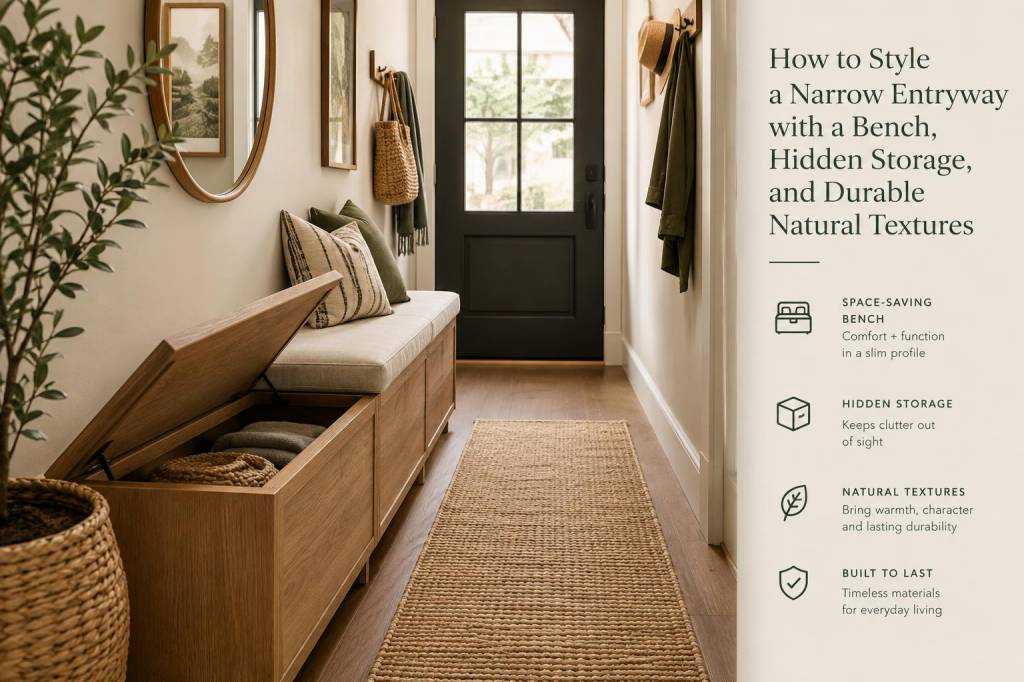
I have a soft spot for narrow entryways because they ask for more creativity than square footage. A slim corridor or compact front hall can feel awkward at first, yet it is often the first place I turn into something calm, useful, and welcoming. In my own home, I always start with three priorities: a place to sit, a place to hide everyday clutter, and materials that can handle constant use without feeling cold or fragile. When those three things work together, even a tight entryway begins to feel intentional rather than temporary.
The balance I look for is simple. A bench gives the space a pause. Hidden storage keeps shoes, leashes, scarves, and mail from taking over. Durable natural textures bring warmth, depth, and a sense of ease that plastic finishes rarely achieve. I like this combination because it solves real problems while still feeling beautiful every single day.
Why a bench changes everything
In a narrow entryway, a bench does more than offer a place to sit. It creates a natural stopping point, which is important in a room where movement is constant. I use benches to make arrival and departure feel smoother. You can sit to remove shoes, drop a bag for a moment, or set down a basket while you sort keys and coats. Without that pause, a narrow hall often becomes a rushing zone where everything lands wherever there is space.
Size matters here. I prefer a bench that is slim enough to preserve clear walking space, usually with a low visual profile and simple lines. A bulky piece can make a narrow entryway feel even tighter, while a lighter frame helps the room breathe. If your space is especially small, I often choose a bench with open legs or an airy base so the floor remains visible. That visual openness makes a real difference.
I also like benches with a natural finish, especially oak, ash, rattan, or reclaimed wood. These materials add character without demanding attention. A softly worn wooden bench has a grounded presence that feels right in an entryway, where shoes, coats, and bags naturally create a more lived-in atmosphere.
Hidden storage that actually stays useful
Hidden storage is where a narrow entryway becomes practical. I have learned that storage only works when it is easy to use every day. If a drawer sticks, a lid is awkward, or a compartment is too small for real life, clutter will find a way around it. That is why I favor storage that is simple, accessible, and forgiving.
In a bench, hidden storage can take several forms. Lift-up seats are useful for seasonal items such as gloves, umbrellas, dog leads, or spare tote bags. Deep drawers work well for shoes and daily accessories if the runners are strong and smooth. Baskets tucked on lower shelves are another favorite of mine because they are flexible and easy to remove when needed. I often use woven baskets made from seagrass, water hyacinth, or rattan because they soften the look of a functional piece.
One thing I always consider is what should live in hidden storage and what should stay visible. The goal is not to hide everything. A narrow entryway feels more welcoming when it has a few visible, beautiful objects: a ceramic tray for keys, a lamp with a warm glow, a vase with branches, or a hook with a well-chosen coat. Hidden storage should support daily life, not erase all signs of it.
Here is the system I rely on most:
- Daily shoes in a closed compartment or basket
- Small essentials in a tray near the door
- Seasonal items in a lift-up bench seat
- Reusable bags folded in a shallow drawer
- Loose scarves or hats in labeled woven bins
That structure keeps things accessible without letting the space become a drop zone.
Durable natural textures that suit heavy use
Natural texture is what keeps a narrow entryway from feeling flat. I like materials that can take knocks, brush against bags, and cope with muddy shoes while still looking graceful. The key is choosing textures with strength and a little visual warmth.
Wood is my first choice because it ages well and feels honest. A sealed hardwood bench, a timber shelf, or a small stool beside the door brings warmth without fuss. If I want a softer note, I bring in woven elements such as jute rugs, cane-front cabinet doors, or rattan baskets. These materials introduce movement and texture while staying grounded in a natural palette.
Stone and ceramic can also work beautifully in an entryway. A stoneware bowl, a ceramic lamp base, or a small tiled tabletop adds durability and a sense of calm. I especially like matte or lightly textured finishes because they feel less precious and more everyday-friendly. In a narrow space, that matters. Materials should look good, certainly, but they should also feel comfortable in a room that gets used hard.
For flooring, I usually aim for something that can stand up to wet weather and grit. If a rug is needed, I prefer low-pile natural fiber options that are easy to shake out. A narrow runner in jute or wool can protect the floor and draw the eye forward, which helps the room feel longer and more composed.
My favorite layout for a compact hall
When I style a narrow entryway, I think in layers from floor to wall. The bench should sit where it can serve without blocking movement. Above it, I like a few well-placed hooks or a slim rail for coats and bags. If there is room, a mirror above the bench is invaluable because it reflects light and gives the eye somewhere to travel.
I avoid crowding the wall with too many small objects. In a tight space, restraint is kinder than excess. One bench, one mirror, a small light source, and one or two storage elements usually feel stronger than a cluster of decorative pieces. A narrow hallway rarely needs much. What it needs is clarity.
If the ceiling is low or the entryway feels dim, I try to lift the atmosphere with light tones and reflective surfaces. Pale wood, cream upholstery, soft white paint, and a mirror with a slim frame can brighten the area without making it feel sterile. If the space already has good daylight, I may lean into richer wood tones and deeper woven textures for contrast.
What I use on and around a bench
The bench itself should remain useful, not overloaded. I treat it as a working surface first, then as a styling moment. A single cushion can make seating more comfortable and add softness, but I keep it fitted or neatly shaped so it does not spill into the walkway. A folded throw can be lovely in colder months, yet I choose one that can be moved easily rather than something that becomes permanent clutter.
On the wall above or beside the bench, I like functional details that also feel decorative. A wooden peg rail, a narrow shelf, or a set of hooks can hold daily items without taking up much visual space. If I use a shelf, I keep it shallow. A deep shelf in a narrow entryway often becomes a place where things pile up. A shallow shelf encourages restraint.
To bring warmth, I often place a small lamp on a nearby console or shelf if the layout allows it. Entryways benefit from soft, low light rather than a harsh overhead glare. A warm bulb changes the mood instantly and makes natural textures feel richer in the evening.
Small choices that make the whole space feel calm
I have noticed that narrow entryways become more successful when every object earns its place. That means choosing materials with care, but it also means paying attention to habits. If shoes are always left by the door, I make space for them. If mail always arrives first, I give it a tray or wall pocket. If bags are always dropped at shoulder height, I add a hook at that level. Good styling follows real behavior instead of fighting it.
I also like to keep the color story gentle. Natural textures shine when they are not competing with too many strong shades. Soft clay, sand, oat, moss, charcoal, and weathered wood all work well together. This palette feels rooted and understated, which suits an entryway that needs to stay visually calm despite daily traffic.
| Element | What I look for | Why it works in a narrow entryway |
|---|---|---|
| Bench | Slim frame, strong surface, low visual weight | Creates a sitting spot without crowding movement |
| Storage | Lift-up seat, drawer, or woven basket system | Hides clutter while staying easy to access |
| Textures | Wood, rattan, jute, stoneware, wool | Adds warmth and durability without visual heaviness |
| Lighting | Warm bulb, lamp, or soft wall sconce | Makes the entry feel welcoming and less harsh |
| Wall details | Hook rail, mirror, shallow shelf | Supports daily use without stealing floor space |
How I keep it feeling lived-in, not crowded
The final detail I always keep in mind is breathing room. A narrow entryway needs negative space more than a larger room does. I resist the urge to fill every corner. Instead, I let the bench stand on its own, let the storage do its job quietly, and let the textures speak for themselves. A woven basket beside a wooden bench can be enough. A mirror can be enough. A small plant with trailing leaves can be enough.
When I style this kind of space, I want it to feel like a gentle welcome, not a performance. It should be easy to use on busy mornings and still feel lovely when you return home at night. That is why I keep coming back to this mix of seating, hidden storage, and durable natural materials. It is practical, but it also has a softness that makes even the smallest entryway feel thoughtful and complete.