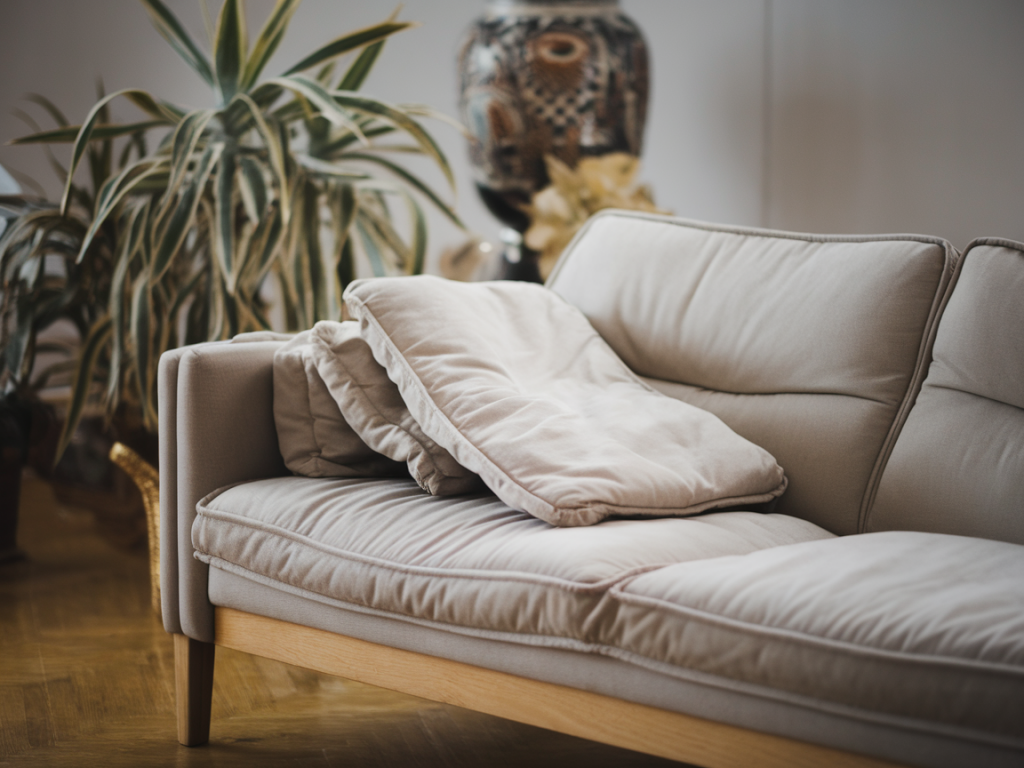
I recently rescued the sagging seat cushions on my IKEA Karlstad sofa using replacement foam and a no-sew cover method, and I wanted to share the whole process — what worked, what I’d do differently next time, and practical tips so you can try it too. If your Karlstad cushions have lost their bounce, replacing the internal foam and giving them a fresh, easy-to-make cover is one of the most affordable and sustainable ways to make the sofa feel new again.
Why replace the foam (and what to choose)
The original Karlstad seat cushions are comfortable at first but tend to flatten after a few years of use. Replacing the foam restores support, improves posture, and stops you sinking into the sofa. When choosing foam, focus on two things: resilience (how well it springs back) and density (how long it lasts).
My recommendations:
UK suppliers I checked: FoamOnline and Foam4u sell HR foam in custom sizes; if you’re elsewhere look for local upholstery foam suppliers. You can also find pre-cut replacements from some online stores, but I like buying a slab and cutting it myself because it’s cheaper and gives flexibility.
Tools and materials
Here’s what I gathered before starting:
Step-by-step: swapping the foam
1. Remove the cushion covers and inner casings (the Karlstad cushions usually unzip). If your cushion doesn’t have a removable inner case, you’ll need to cut carefully or work through the zipper opening.
2. Measure the old foam: length, width, and thickness. I also noted where it was compressed so I could decide if a thicker replacement was needed.
3. Cut the new foam. I used an electric carving knife — it gives a clean, straight cut. If you don’t have one, a long serrated knife works; cut slowly and firmly. Always undercut slightly and test-fit; you can always trim more off.
4. Wrap the foam in a layer of Dacron. This gives the seat a softer edge and hides any slightly imperfect cuts. Use spray adhesive sparingly to attach the Dacron to the foam, smoothing out wrinkles as you go.
5. Slide the new foam into the inner cushion case. You may need to work it in bit by bit; gentle folding of the inner cover helps. If the case is beyond saving, use a new inner cover or create a simple one from muslin using fusible web.
Making a no-sew cover that looks neat
I wanted a cover I could remove to wash, but I also wanted to avoid sewing. Here are the no-sew techniques that worked well for me:
If you prefer a more tailored result but still want to avoid a machine, you can combine fusible tape with a dab of fabric glue along high-stress seams. Allow glue to fully cure before using.
Finishing touches and styling tips
- If the cushion shape feels a little boxy after replacement, steam the fabric lightly to relax it. A few days of sitting on the sofa will help the cover and foam settle together.
- For a closer match to the original Karlstad look, use a mid-weight linen or a linen-cotton blend and keep the corners crisp by folding the fabric neatly at the edges.
- Consider replacing or reinforcing the seat webbing if the sofa base feels loose — new foam won’t fully compensate for worn support below the cushions.
- If you’re tempted by ready-made covers, brands like Bemz produce tailored replacement covers for many IKEA sofas (including Karlstad). They’re not no-sew, but they’re an excellent option if you want a perfect fit without DIY measuring.
Common questions I get
Will a no-sew cover hold up? Yes, if you use quality upholstery fabric and good fusible tape or textile glue. The envelope style is very sturdy because the weight of the cushion keeps it in place. For heavy daily use, consider adding Velcro to the overlap for extra security.
Can I mix foam types? Absolutely. Some people put a thin layer of memory foam on top of HR foam for added comfort, but I prefer all HR for longevity and support.
How long will this fix last? With good HR foam and a protective Dacron wrap, you’ll get several years of improved support — often 5–10 years depending on use.
Is this eco-friendly? Replacing foam and re-covering is much more sustainable than buying a new sofa. If possible, choose foam suppliers that offer recycled options or look for secondhand foam slabs in local groups. Use natural-fibre covers (linen, cotton) to make washing and end-of-life recycling easier.
If you’d like, I can walk you through measurements for your exact Karlstad cushion and suggest quantities and suppliers local to the UK. I’ve done this repair twice now and always enjoy the small ritual of making something feel treasured again — it’s a lovely, low-waste project that pays off in comfort and style.