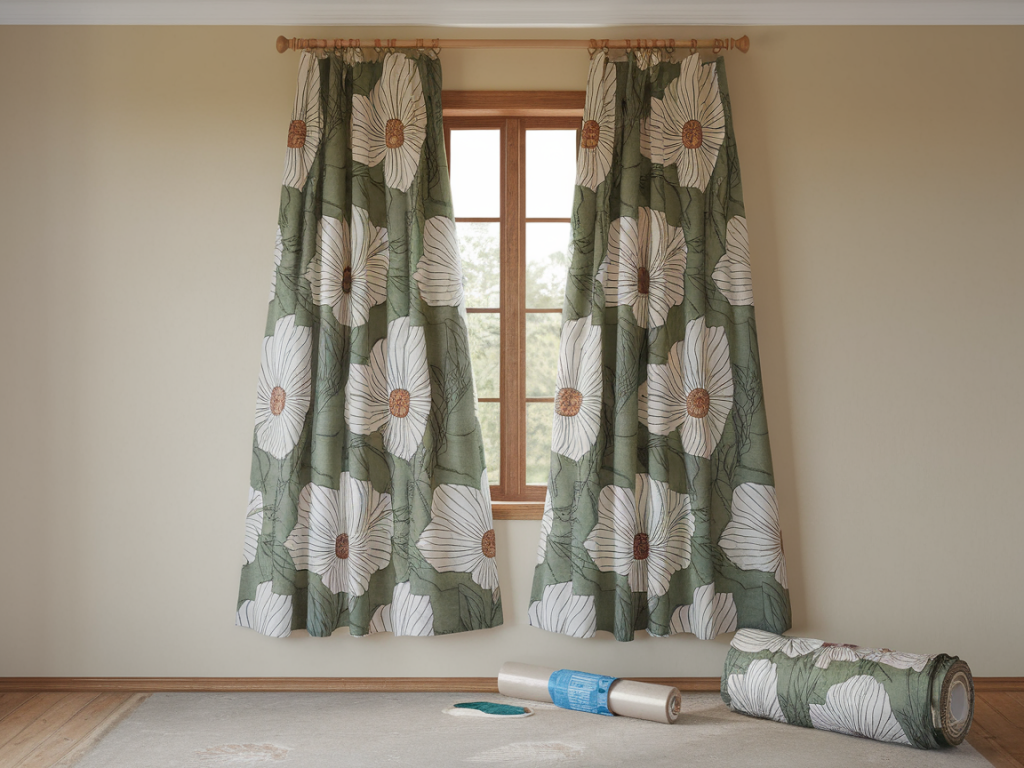
I love curtains for how they transform a room — they soften light, add texture, and make even a temporary rental feel like home. When I needed thicker, thermal-lined curtains for a chilly rented bedroom, I wanted something affordable, low-waste and removable. Thrifted linen outer panels plus a fusible thermal lining (iron-on tape style) gave me warmth, sound-dampening and a soft, lived-in look — all without sewing or drilling into walls. Here’s the exact process I used, the pitfalls to avoid, and tips to make the whole project feel both cozy and responsible.
Why I chose thrifted linen and iron-on thermal lining
Linen is breathable, ages beautifully, and often turns up in charity shops as tidy tablecloths or curtains. Reusing thrifted textiles keeps them out of landfill and gives you unique texture at a fraction of the cost. For warmth, I didn’t want to buy heavy blackout curtains that felt synthetic or required sewing. Fusible thermal lining — sometimes sold as iron-on thermal tape or fusible fleece with a thermal coating — bonds to fabric with heat and adds a layer of insulation without permanent alteration. It’s ideal for renters because the finished panels are simply hung and easy to remove.
Materials and tools
| Thrifted linen panels or large linen fabric | Enough width for your window + hems (see measuring below) |
| Iron-on thermal lining (fusible) | Sold by the metre as "fusible thermal interlining" or "fusible fleece thermal lining" |
| Bias tape or iron-on hemming tape | For neat edges if you don’t want to sew |
| Steam iron | Good steam function and adjustable heat |
| Non-slip curtain clips or curtain rings with clips | To hang without sewing a rod pocket |
| Measuring tape, fabric scissors, tailor’s chalk | Basic prep tools |
| Velcro strip (sew-on or peel-and-stick) | Optional for attaching header to wall or pelmet without nails |
Measuring — the step people skip (don’t)
Good fit makes a cheap curtain look considered. Measure the full width of your window including any frame you want to cover. For fullness, multiply the finished width by 1.5–2 times depending on how full you like the gathers. For rentals I usually aim for 1.8x — cozy but not fussy.
Length: Decide whether you want the curtains to hover above the floor (1–2 cm gap), kiss the floor, or puddle slightly. Measure from the curtain rod to the desired hemline, then add 10–15 cm for top header and bottom hem allowance if you plan to iron-tape hems.
Preparing your thrifted linen
Wash and dry the linen before starting — thrifted finds often shrink a bit and need a good de-wrinkling. If the linen is patterned or has minor stains, position the best parts to show on your panels. Press the fabric to remove creases so the fusible bond will be even.
Cutting and laying the fusible thermal lining
Lay your linen face-down on a large, heat-safe surface. Place the fusible thermal lining, a touch smaller than the panel (about 1 cm inset on all sides) — this prevents stiff raw edges. Use tailor’s chalk to mark a guide and cut both layers if needed. Some fusible thermal linings come with a paper backing; keep it on until you’re ready to press.
Bonding without sewing: step-by-step
- Preheat your iron to the manufacturer’s recommended temperature for both fabrics (usually medium-high for linen; follow the lining instructions).
- Position the fusible lining on the wrong side of the linen panel, paper side up.
- Working in sections, remove the paper backing and press firmly for the recommended time. Use a pressing cloth (a clean cotton tea towel) between the iron and fabric to protect delicate fibres and to distribute heat evenly.
- Keep the iron moving slightly to avoid scorching; apply even pressure and allow the panel to cool fully before moving it.
Important: test a small scrap first. Different thrifted linens (colours, weaves, any finishes) can react differently to heat and fusible adhesive. A quick test prevents surprises.
Finishing the edges (no sewing options)
If you don’t want to sew, iron-on hemming tape or pre-made bias tape will tidy raw edges. Fold the raw edge under once or twice (depending on how much bulk you want), slip the iron-on tape inside the fold and press according to the product instructions. For a neater header, you can use curtain tape that creates a small rod pocket or loop — some varieties are fusible and can be ironed into place. Otherwise, curtain rings with clips are wonderfully flexible and require no alterations to the fabric at all.
Hanging without drilling
Renters often can’t drill. I used a combination of a tension rod and heavy-duty Command curtain clips (or removable adhesive hooks + rings). If you have a wooden lintel, peel-and-stick Velcro or a stick-on pelmet can support lightweight curtains and still be removed cleanly. Always follow the adhesive product’s weight limits and prepare the wall surface by cleaning with rubbing alcohol.
Styling and small upgrades
To make second-hand linen feel intentional, I like to add:
- Natural wooden rings or brass clips for a calm, elevated finish.
- A narrow cotton tape sewn across the back at the top (or attached with fusible tape) to create even pleats when using clips.
- Layering: a sheer panel underneath keeps privacy while letting light filter in; the thermal linen goes on top for warmth.
Care and longevity
Wash lined curtains gently on a cool cycle and air-dry when possible. Re-press as needed. If the fusible bond starts to lift after many washes, you can re-press the affected area with the original instructions or replace the lining on a tired panel — another great second-life project.
Things I learned the hard way
- Always test fusible products on a scrap — some thrifted fabrics have finishes that react poorly to heat.
- Don’t over-shrink: pre-wash everything before bonding the layers to avoid puckering later.
- Work in a clean, lint-free area; fibres from older linens can trap under the adhesive and show up as bumps.
If you’d like, I can share a printable checklist for measurements and a recommended shopping list of fusible linings I’ve used in the UK, plus exact suppliers where I’ve found the best thrifted linens. I find this project wonderfully forgiving — it’s a quick way to add real comfort to a rental without the permanence or expense of bespoke curtains.