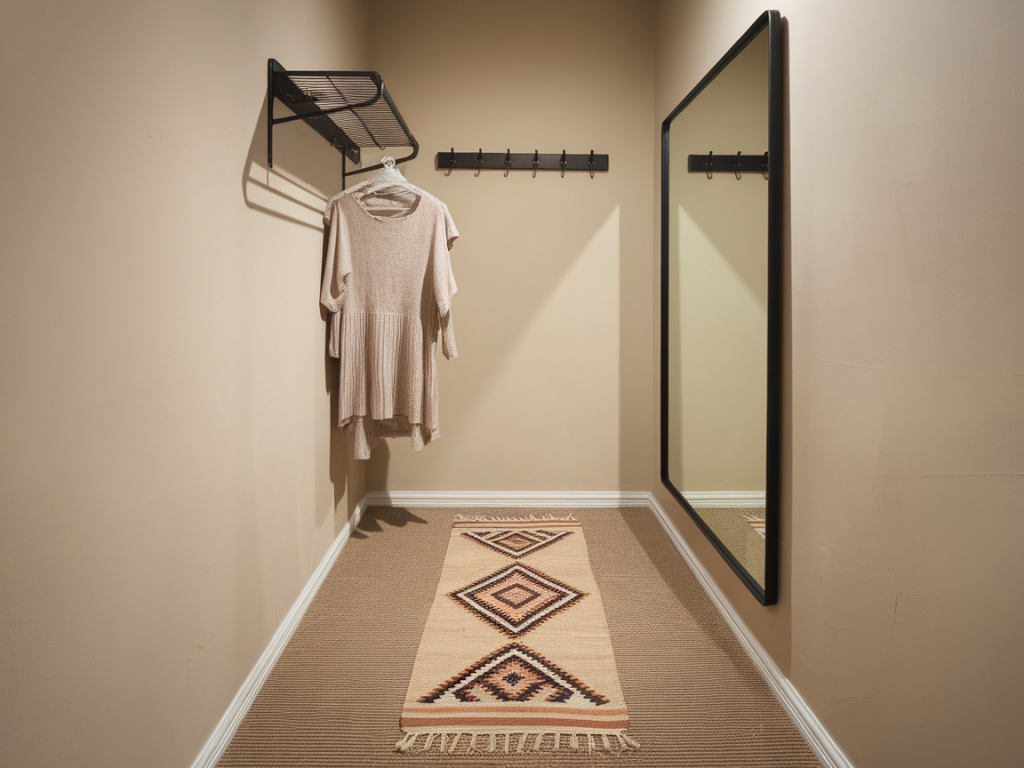
I’ve always believed that a hallway should be more than a pass-through — even the narrowest space can feel welcoming, practical and quietly beautiful. In my small home projects and rentals, I’ve learned a few reliable tricks that transform tight halls without major renovations: strategic mirrors to broaden the sense of space, well-chosen hooks to tame clutter, and a single statement runner to pull everything together while hiding the bits you’d rather not see. Below I share how I style small hallways so they feel warm, calm and useful, with ideas you can adapt whether you’re in a flat, a terraced house, or a studio.
Create depth with mirrors
One of the simplest ways to make a narrow hallway feel wider is to use mirrors deliberately. I’m not talking about a random small mirror stuck on a wall — think about scale, placement and style.
- Scale up: A large, full-length mirror or an oversized framed mirror reflects light and gives the illusion of a second, deeper space. I prefer mirrors with a warm-toned frame (rattan, oak or brushed brass) because they add warmth rather than cold brightness.
- Group mirrors for interest: If you can’t fit one large mirror, create a little gallery of two or three varying shapes — a round mirror plus an oblong one works well and feels curated.
- Placement matters: Mount a mirror opposite a window or the main light source to bounce daylight through the hall. If you have stair landing light overhead, place the mirror to catch that glow and scatter it down the corridor.
- Lean where you can: If wall drilling is restricted (common in rentals), a tall mirror leaning against the wall at the end of the hall instantly deepens the view and feels relaxed.
I often look for mirrors from local antique fairs, Etsy sellers who restore vintage frames, or shops like Habitat and Made for modern, affordable options. For a sustainable choice, second-hand frames painted in a soft, neutral tone work wonders.
Hooks and storage: hide clutter without hiding personality
Hooks are the unsung heroes of functional hallways. They keep coats, bags and everyday items off the floor and make routines easier — but they can also add character.
- Choose a single line of hooks: A neat row at shoulder height keeps the hallway from looking chaotic. I prefer 4–6 hooks maximum in smaller halls.
- Mix styles mindfully: If you want a playful touch, alternate simple brass hooks with ceramic pegs or wooden knobs. Keep the finishes in a similar tone to avoid visual noise.
- Add a small shelf above: A slim shelf over the hooks is perfect for small trays, a key bowl, or a seasonal twig vase. IKEA’s picture ledges are a cheap, renter-friendly option.
- Use closed storage where possible: A narrow console with a drawer or a slim cupboard (even vintage cake stands with a door) lets you tuck away gloves, umbrellas and dog leads.
When I style hooks, I intentionally limit the visible items. One scarf, one bag, one coat per hook feels tidy and considered. For seasonal changes, rotate items and store excess in a basket on a top shelf or under a bench.
The power of a single statement runner
A runner does so much: it protects floors, softens footsteps, warms up the space, and — crucially — hides the inevitable scuffs and clutter in a narrow corridor. My rule is to pick one runner that anchors the palette and tone of the home.
- Choose length first: Ideally the runner should reach close to the end of the hallway, leaving a gap of a few centimetres at either end. Too short and it looks timid; too long and it overpowers small entryways.
- Opt for a pattern that masks marks: Small-scale florals, kilim stripes or a subtly mottled weave are forgiving and hide foot traffic well. I love natural fibre runners — jute and wool blends feel cosy and age beautifully.
- Limit the colour palette: Pick one or two colours from the runner to echo in hooks, a mirror frame, or a small wall art piece. This repetition ties the hall together without cluttering it visually.
- Practical underlay: Use a non-slip underlay suited to your floor (hardwood vs tile) so the runner stays put and doesn’t become a trip hazard. Brands like Rug Pad UK make thin, effective options.
For rentals, washable runners are a godsend: look for wool blends with stain-resistant treatments or flatweave cotton runners you can shake out. I keep a neutral spare folded in a closet for busy seasons like winter, when boots bring more mud.
Styling details that add warmth (without clutter)
Small halls don’t need much to feel thoughtfully decorated — a few tactile touches do the trick:
- Textured wall hooks or a small woven basket: For gloves or mail. A hanging basket made from seagrass or rattan brings organic texture instantly.
- Soft lighting: A small wall sconce or a lamp on a narrow console makes the space inviting. Choose warm bulbs (2700K) and consider a dimmer if wiring allows.
- Greenery: One narrow plant — a trailing pothos on a high shelf or a small fern on a console — breathes life into the corridor without overwhelming it.
- Seasonal swap: Swap a wreath for winter, a dried-seed spray in autumn, or a lavender bundle in summer. It’s an easy way to refresh the hall with little cost.
Practical layout ideas
| Hallway size | Best approach | Key item |
|---|---|---|
| Narrow (under 90cm) | Keep furniture minimal; use wall hooks and a thin runner | Slim wall-mounted shelf |
| Medium (90–120cm) | Console with drawer or bench + mirror | Small bench with storage basket underneath |
| Wide (over 120cm) | Combine hooks, larger console, gallery wall | Oversized mirror or runner pair |
Every hallway is different, but the same principles apply: reflect and amplify light, store smartly and let one strong textile choice anchor the palette. I test these ideas in my own home and workshops, keeping sustainability and longevity front of mind — choose pieces that age well, repair rather than replace, and let your hallway tell a calm, useful story about the people who live there.