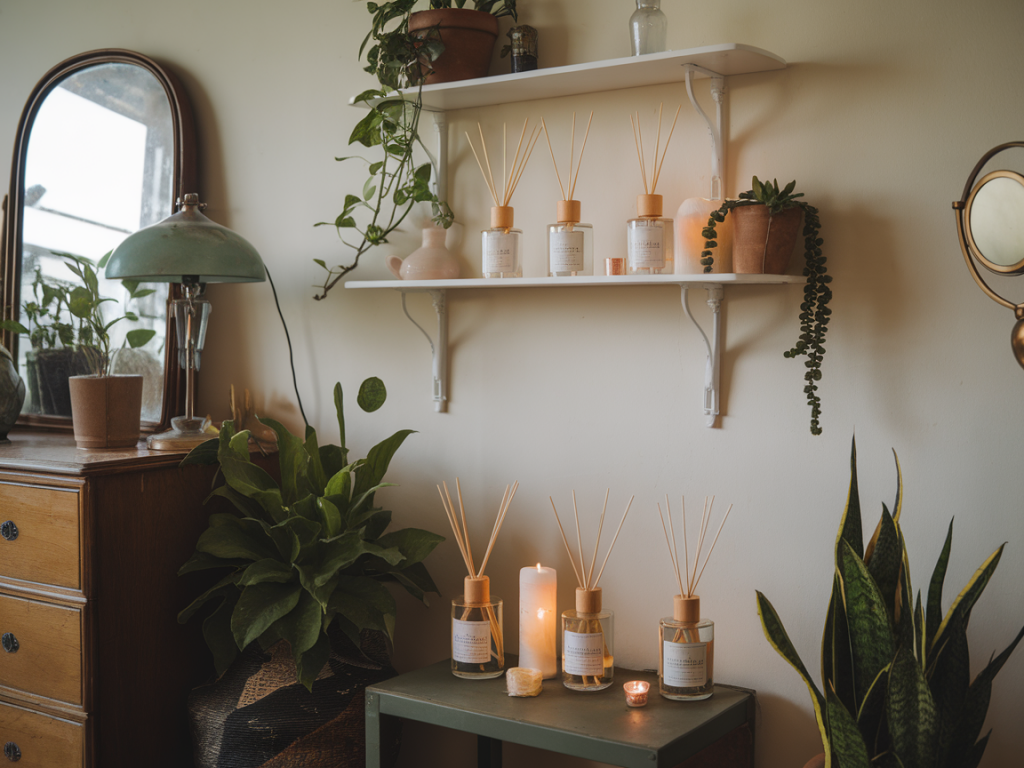
I love a small flat that smells faintly of home — not the sharp hit of an aerosol, but something subtle and layered: citrus and rosemary for morning, cedar and orange peel in the evening. Over the years I’ve experimented with all sorts of scenting methods, and for a compact space I keep coming back to long-lasting, low-waste jar diffusers using foraged botanicals. They’re simple, beautiful on a shelf, and much kinder to the air in a small room than sprays or synthetic plug-ins.
Why choose jar diffusers with foraged botanicals?
There are a few reasons I favour this approach:
- Natural and low-toxicity — when you make your own, you control what’s in it. I use fractionated coconut oil or a light carrier oil and essential oils rather than solvent-based fragrance oils.
- Low waste — reuse glass jars from jam or nut butter, forage twigs, peels, and dried flowers, and avoid single-use plastic packaging.
- Tailored scent — you can build subtle blends that evolve over days and weeks, rather than the one-note blast of a spray.
- Decorative and seasonal — jars become little vignettes of whatever’s in season: foraged seedheads, dried citrus slices, conifer tips. They look lovely on a windowsill or bedside table.
What works (and what doesn’t) in a small flat
In a compact space you want scent that’s gentle and sustained. High concentrations will feel overpowering fast. I aim for diffuse, layered aroma rather than intensity. Foraging gives you beautiful aroma materials — rosemary, lavender, pine, citrus peel — but note that some things (like fresh garlic or strong onion) will overpower. Also, essential oils are potent: a few drops go a long way.
For the base, I prefer a light carrier oil (fractionated coconut oil, sweet almond oil) because it holds the essential oils and slowly releases scent. Grain alcohol (like vodka) is another option for a lighter, quicker-release diffuser; it evaporates faster, so the scent disperses more readily but may need topping up. If you want the slowest release and the most decorative look, choose oil.
Materials you’ll need
- Small glass jars with a wide mouth (recycled jam jars, small mason jars, or Weck jars work nicely)
- Rattan diffuser reeds or untreated bamboo skewers (or simple wooden cocktail sticks)
- Fractionated coconut oil or light carrier oil (50–150 ml depending on jar size) or a high-proof neutral alcohol like vodka
- Essential oils (I favour small-batch or organic brands like Neal’s Yard Remedies or This Works for reliability, but any pure essential oil will do)
- Foraged botanicals: pine tips, rosemary sprigs, dried orange peel, lavender heads, eucalyptus leaves, bay leaves, juniper berries, rosehips, acorns with cup intact, seedheads, etc.
- Optional: a funnel, labels, twine for decoration
Simple method (works every time)
- Clean and dry your jar.
- Add foraged botanicals loosely to the jar (don’t pack too tightly; air needs to circulate).
- Add carrier oil, leaving 1–2 cm of headspace from the rim. If using alcohol, fill similarly.
- Add essential oils: start conservatively — about 10–15 drops per 50 ml of carrier oil, then adjust in later batches.
- Insert 3–5 reeds or skewers; flip them after an hour so the soaked ends expose scent. Flip again once a week.
- Place the jar away from direct heat or sunlight to avoid rapid evaporation and to preserve the botanicals’ colour.
Six long-lasting jar diffuser recipes with foraged botanicals
Each recipe below is scaled for a 150 ml jar (about a small jam jar). If your jar is bigger or smaller, adjust proportionally.
| Recipe | Ingredients | Notes |
|---|---|---|
| Woodland Walk |
| Earthy and grounding. Juniper and pine complement cedarwood for a long-lasting green scent. |
| Kitchen Citrus & Rosemary |
| Bright, fresh, and great near the kitchen. The vodka helps lift the citrus into the air without being sharp. |
| Lavender & Meadow |
| Soft and calming — ideal for bedside or a small living room. Bergamot adds a gentle citrus lift. |
| Eucalyptus & Mint Breeze |
| Refreshes the air without being medicinal. Good in bathrooms or entranceways. |
| Autumn Spice |
| Warm and cosy. Cinnamon leaf essential oil is stronger than cassia; use lightly. |
| Rosehip & Tea |
| Fruity and herbal — rosehips add a soft tang that pairs well with geranium. |
Maintenance tips to keep them lasting longer
- Flip reeds weekly and rotate their position to refresh scent. Replace reeds every 2–3 months if they become clogged or very dark.
- Top up oil when it gets low; add 3–5 drops of essential oil each time you top up to maintain strength.
- If you used fresh botanicals, swap them out when they start to decay (mould will ruin the blend). For a long life, dry fresh materials before placing them in the jar for oil-based diffusers.
- Keep jars away from direct sunlight and heaters to prevent the oil from going rancid or evaporating too fast.
Making these jar diffusers feels a bit like bottling a season. They’re forgiving to make, easy to customise, and they add both scent and a small decorative object to a compact flat. If you’ve got a favourite foraged find — a particular berry, scent of a hedgerow after rain — try pairing it with a complementary essential oil and see how it evolves in your space. I find it’s one of the gentlest, most homely ways to scent a small home without resorting to sprays.