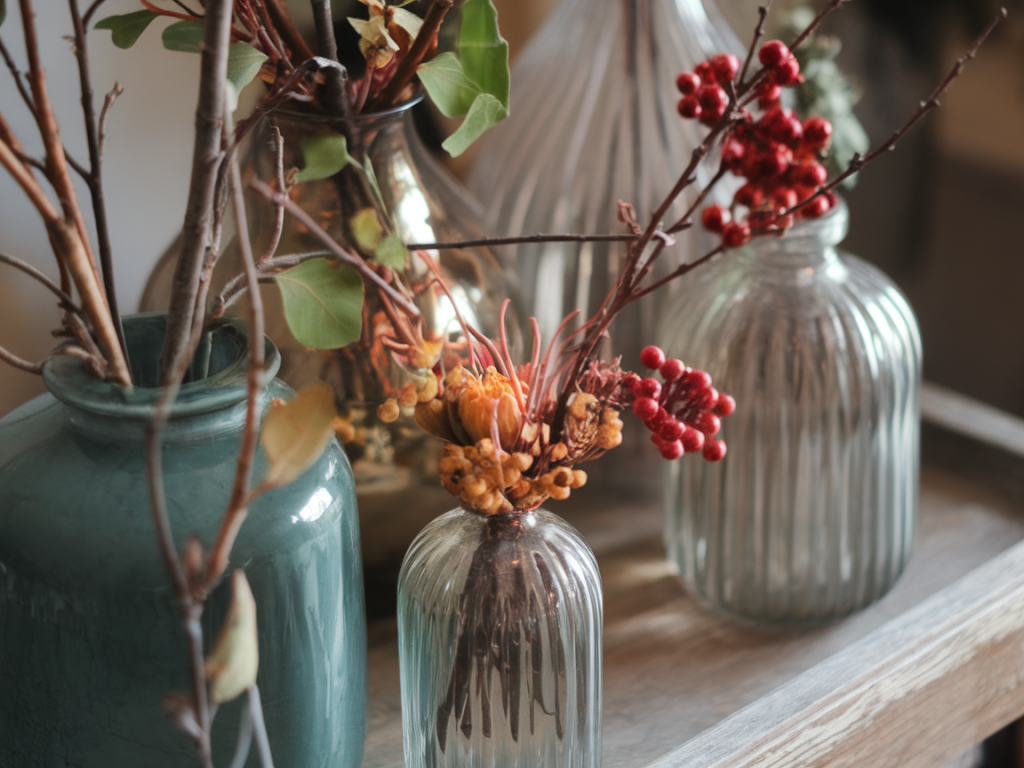
There’s something quietly joyful about changing the centrepiece on your table to reflect the shifting seasons. Over the years I’ve developed a simple, affordable system that keeps our home feeling fresh for a whole month at a time — using mostly foraged stems and thrifted vases. It’s low-waste, budget-friendly, and makes the act of styling feel like a gentle ritual. Below I’ll walk you through how I plan a month-long rotation, what to forage each season, how to care for stems so they last, and where to source beautiful second-hand vessels.
Why a month-long rotation?
A month is long enough to settle into a look and short enough to keep things interesting. Weekly swaps can feel fussy; seasonal changes (three months) can be too slow if you crave frequent refreshes. A month gives each arrangement time to breathe and evolve — especially if you choose stems that age attractively, like grasses, seedheads and eucalyptus. This approach also fits well with a slow, sustainable mindset: I forage locally, repair and reuse thrifted vases, and avoid buying single-use blooms.
How I plan the rotation
I start with a simple calendar: four weeks, one theme or dominant stem per week. Each week I vary texture, height and colour so the centrepiece never feels repetitive. Here’s the skeleton I use:
- Week 1 — Architectural/statement stem (e.g., a sculptural branch, tall willow, or twisted alder)
- Week 2 — Textural mix (grasses, seedheads, dried hydrangea)
- Week 3 — Soft foliage (eucalyptus, beech, ferns)
- Week 4 — Seasonal pop (wildflowers, berries, foraged sprigs)
By alternating bold shapes with soft textures, the table always reads balanced. I keep three or four vases in rotation: a tall narrow vase, a wide low bowl, a medium bottle, and a small jug. Swapping vessels is as transformative as changing stems.
Foraging: what to gather by season
Foraging responsibly means getting to know what’s abundant and in season locally, asking landowners for permission, and avoiding rare or protected plants. I carry a small pair of snips, cotton gloves and a basket. Here are favourite stems I forage across the year:
| Season | Reliable stems | Why I love them |
|---|---|---|
| Spring | Forsythia, cherry blossom prunings, pussy willow, cow parsley, fresh beech leaves | Fresh colour, delicate silhouettes, quick to leaf out in water |
| Summer | Meadow grasses, poppy seedheads, cornflowers, peony foliage, rose hips later in season | Wild textures and summery colour, seedheads age beautifully |
| Autumn | Oak branches, maple leaves, hydrangea heads, berried branches (holly, cotoneaster) | Rich warm tones, structural branches hold up well |
| Winter | Evergreen sprigs (pine, yew), eucalyptus, dried grasses, seedheads, hawthorn | Longevity in water, sculptural shapes, festive textures |
Thrifted vases: how to choose and prep them
I love visiting charity shops, flea markets and antiques fairs for vases — you can find real character for very little money. When choosing a vase, consider:
- Proportion: tall stems need tall necks; short grasses or bunches look best in wider mouths.
- Material: glass is forgiving and easy to clean; earthenware adds warmth and hides water marks.
- Weight and stability: heavier bases prevent tipping when you have long branches.
Before using a vintage vase, wash it thoroughly (hot soapy water) and check for hairline cracks. If the neck is too wide for a stem, I make a simple support with florist foam scraps or a DIY grid using tape across the mouth — this helps arrange stems with more control and reduces water needed. I avoid floral foam when possible but will reuse small offcuts from past projects sparingly.
Preparing and caring for stems to last the month
How long your stems last depends on species and care. These are my go-to prep and maintenance steps:
- Clean cuts: recut stems at a 45° angle with sharp scissors or secateurs to increase water uptake.
- Remove lower foliage: strip any leaves that would sit below the waterline to prevent rot.
- Use lukewarm water and change it every 3–4 days. A quick rinse of the vase helps remove sludge.
- Additives: I usually don’t use commercial flower food. A teaspoon of sugar and a few drops of bleach can help in a pinch, but for foraged stems I prefer fresh water and cleanliness.
- Location: keep arranged stems out of direct midday sun and away from radiators/fruits (ethylene speeds decay).
Design tips for each week
To keep the rotation interesting, I play with scale, negative space and colour accents. Here are quick recipes I use for each week type:
- Architectural week: One or two long branches in a tall bottle. Keep negative space around them so the form reads clearly. Add a small dish with moss at the foot of the vase for contrast.
- Textural week: Mix three kinds of seedheads and grasses in a low wide bowl. Vary heights slightly and tuck in a dried hydrangea head for softness.
- Foliage week: Fill a jug with eucalyptus and a few sprigs of seasonal leaves. Eucalyptus oil scents the room and the foliage ages prettily.
- Pop week: Go playful: add a small bunch of summer wildflowers or coloured berries, and place beside a stack of favourite books or a small ceramic candle to create a vignette.
Budget and sustainability tips
My approach is intentionally frugal: foraging supplies the majority of material, and thrifted vases keep costs down. A few more ideas:
- Swap stems with friends — a seasonal stem exchange is a lovely way to refresh without buying.
- Upcycle jars and bottles: a washed wine bottle works beautifully as a slim vase.
- Preserve favourites: dry and keep particularly beautiful seedheads to use later in winter arrangements.
- Document your rotations: I take quick photos in a notebook so I can repeat combinations I love.
When arrangements finish
Not every stem will last the whole month — and that’s okay. When blooms or leaves start to decline I remove them, see if remaining stems can be reshaped, or bring them to a smaller vessel for a secondary display. Compost spent foliage or use dried bits for wreaths, botanical dye experiments or seasonal crafts — nothing goes to waste where I can help it.
If you try a month-long rotation, I’d love to hear how it goes. You can share pictures or swap tips via the contact page on https://www.takerootdesign.co.uk — there’s something so nourishing about seeing how other homes interpret the same seasons.