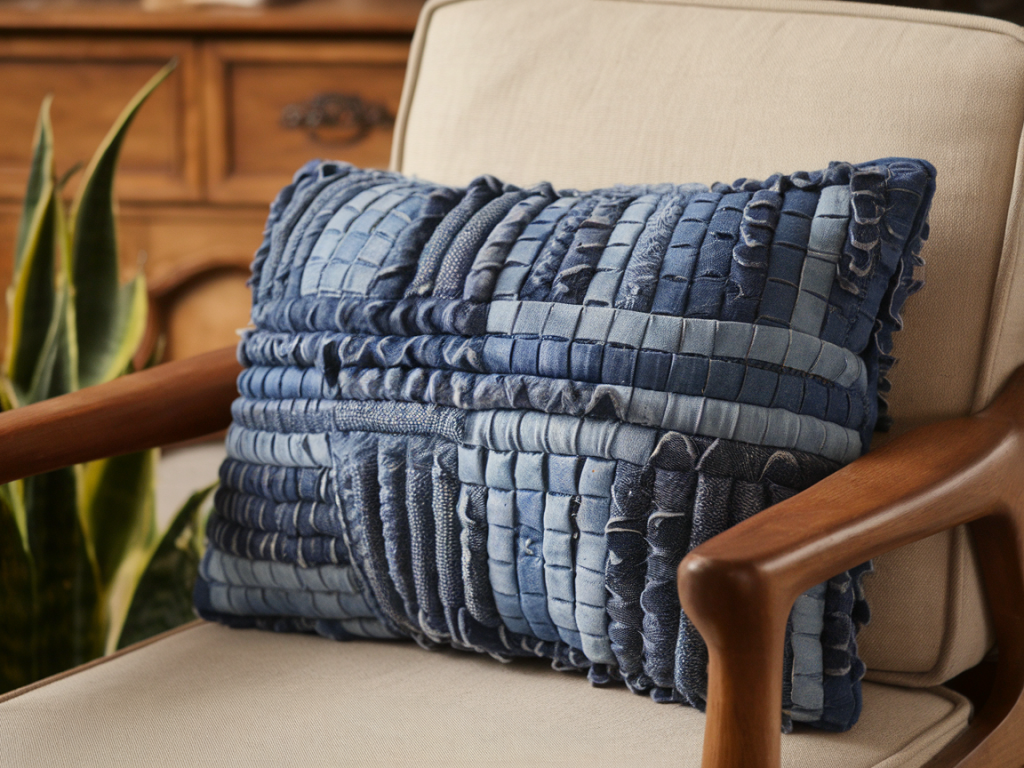
I love breathing new life into well-worn things, and old denim is one of my favourite materials to upcycle. It’s sturdy, full of character, and the indigo fades tell a quiet story that I want in my home. In this project I’ll show you how to turn an unloved pair of jeans into a textured lumbar cushion cover — a simple, low-waste make that works for renters and homeowners alike. I tested everything on my own sofa before sharing it here, and I’ll walk you through tools, shortcuts, and styling ideas so you can make a cushion that feels both cozy and considered.
Why denim for cushions?
Denim is durable, easy to sew, and forgiving when layered. I like its tactile quality and how the seams, pockets and belt loops can be used as design elements. Using denim salvages fabric that might otherwise be thrown away and gives you a unique, relaxed piece — perfect for a casual, lived-in sofa or a reading nook. Plus, a lumbar shape (roughly 30 x 45 cm / 12 x 18 in) adds back support and visual interest without needing a lot of fabric.
Materials and tools
Here’s what I usually gather before I start. You can find most items locally or online — I often source buttons and trims from charity shops or small suppliers like Merchant & Mills.
- One pair of old jeans (men’s or women’s — any size works, depending on the amount of usable fabric)
- A cushion insert (30 x 45 cm / 12 x 18 in) or stuffing (I prefer feather inserts for a soft, plump finish)
- Matching thread (strong polyester or cotton-wrapped polyester)
- Sharp fabric scissors
- Sewing pins or clips
- Measuring tape and fabric chalk or a removable marker
- Sewing machine with a heavy-duty needle (90/14 or 100/16) — you can hand-sew if necessary but a machine makes seams neater
- Optional: zipper (size 30–45 cm / 12–18 in) or buttons/snaps if you want a removable cover
- Optional: clear stabiliser interfacing for areas with lots of stretch or thin denim
Preparing the denim
Start by washing and drying the jeans as you normally would — this pre-shrinks the fabric and removes dirt and oils. Once they’re dry, lay the jeans flat and look for the most interesting panels: the back yoke, pockets, and the area around the seams. I like to use pocket backs and the top of the legs for texture. Avoid heavily worn knee holes unless you want a distressed look.
Measure your cushion insert and add 1 cm (3/8 in) seam allowance on all sides. For a 30 x 45 cm insert, cut two pieces of denim to 31 x 46 cm each. If you want to feature a pocket or fly, position it so the front piece will showcase that detail.
Cutting and composing the front panel
This is the fun part — composing a patchwork front from jeans panels. There are two easy approaches:
- Single-panel front: Use a large flat section (typically the back of the jeans) and centre a pocket or seam as an accent.
- Patchwork front: Cut smaller rectangles or trapezoids from different areas (pocket, waistband, leg) and sew them together to form a 31 x 46 cm front. This gives more texture and lets you use tricky shapes.
If you’re doing patchwork, arrange the pieces right-side up and sew them together with a 1 cm seam allowance, pressing seams open as you go. For an intentionally rustic look, you can topstitch the seams on the right side with a contrast thread.
Adding functional details
I often incorporate a pocket as a decorative element and a practical stash for a book or phone. To do this, simply position the pocket on the front panel and stitch around three edges, leaving the top open. Reinforce the top edge with a double line of stitching.
If you want the cover to be removable, you have two easy options:
- Zipper closure: Install an invisible zipper on one long edge. Use a zipper foot and pin carefully — denim can be thick near seams.
- Envelope/back closure: Cut a rectangular back in two overlapping pieces so they form an envelope. This is my preferred low-waste method because you avoid inserting a zipper entirely.
Sewing the cushion
With front and back pieces ready (or patchworked front + envelope back), place them right sides together. Pin or clip around the edges. Sew with a 1 cm seam allowance, leaving a small 10 cm gap if you plan to stuff the insert yourself — otherwise leave the envelope/zipped edge open for the insert.
Clip the corners at 45 degrees (without cutting the stitching) to reduce bulk, then turn the cover right side out and press the seams gently. Insert your cushion and close the gap with an invisible slipstitch if hand-finishing, or zip up/arrange the envelope flaps.
Finishing touches and styling
To make the lumbar cushion feel like it belongs with other pieces, I usually add these little touches:
- Topstitch around the outer edge with a contrast thread — it frames the cushion and reads as intentional craft.
- Add a small leather tab or a reclaimed button near a corner for interest.
- Pair the denim lumbar with a warm textured cushion (wool, linen, or a woven neutral) and a plant for softness and contrast.
Care and longevity
Denim is forgiving but seals like back pockets can trap dust. I wash denim covers sparingly — spot-clean small stains and wash on a cool cycle when needed. Line dry to keep the fabric soft and avoid excessive fading. Repair any small tears with visible mending — sashiko or simple running stitches add charm and extend the life of the cover.
| Problem | Quick fix |
| Thick seams hard to machine | Use a heavy-duty needle, sew slowly, and open seams where possible to reduce thickness |
| Uneven patchwork edges | Trim after sewing and press seams flat; topstitch to hide imperfections |
| Colour bleeding | Wash separately the first time and use salt in wash to help set the dye |
Frequently asked questions
Can I use stretch denim? Yes, but stabilise very stretchy areas with a lightweight interfacing to prevent distortion. Stretch denim may be better for pillow slipcovers than structured envelope backs.
Do I need a sewing machine? No — you can hand-sew the seams using a sturdy backstitch. It’ll take longer but is entirely possible and very satisfying.
What if my jeans aren’t the same colour? Embrace the variation. Contrasting indigo panels look intentional and bring a relaxed, layered feel to the cushion.
If you try this project, I’d love to see your results — tag @takerootdesign on Instagram or send me a photo through the contact page at https://www.takerootdesign.co.uk. Small, handmade pieces like this are what make a home feel rooted and personal.