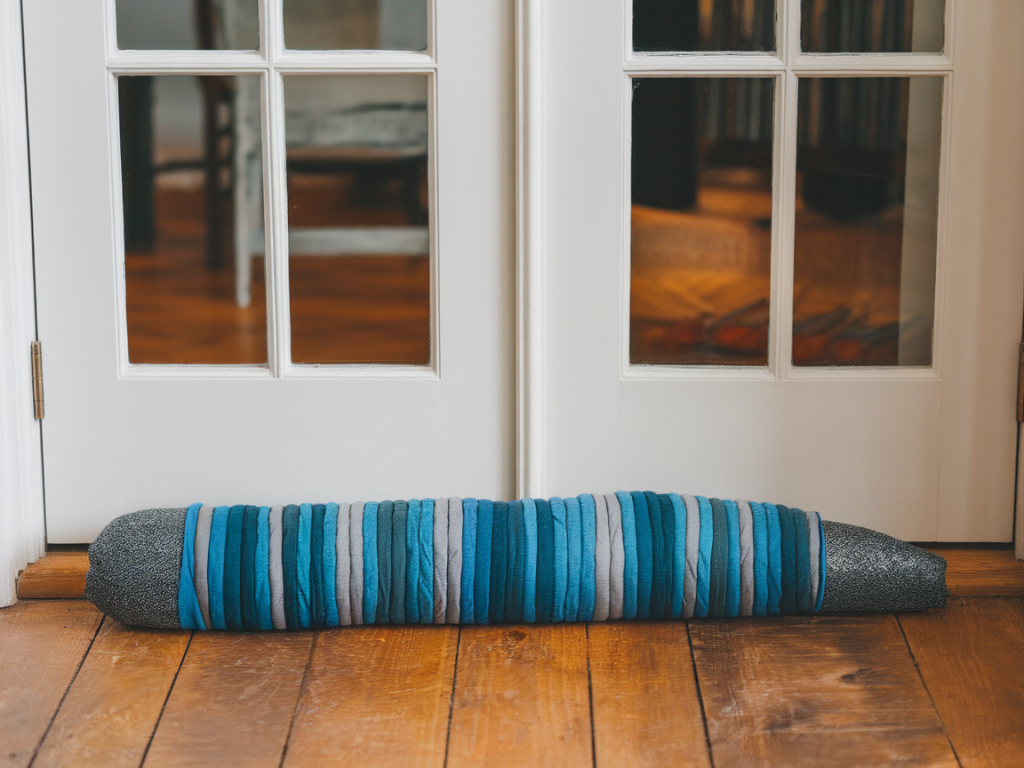
I live in a small Victorian terrace with two sets of low-silled French doors that let in beautiful light — and an awkward amount of draught. Over the years I’ve tried rugs, weatherstrips and heavy curtains, but one winter I decided to make a washable, heat-retaining draft snake specifically for those doors using upcycled wool and a reflective lining. It’s cosy, looks charming at the base of the doors, and has the added benefit of being washable and easy to refresh each season. Below I share exactly how I make them, why the materials matter, and tips to fit them to your doors.
Why a draft snake (and why upcycled wool + reflective lining)?
A draft snake is a simple, low-cost way to block cold air coming in at the base of doors and windows. Using upcycled wool for the outer layer keeps the piece breathable, naturally insulating, and feels much nicer against bare floors than synthetic fabrics. Wool also has the lovely property of trapping air within the fibres, adding natural thermal resistance.
The addition of a heat-reflective lining dramatically improves performance. These linings — often sold as aluminised or reflective insulation — bounce radiant heat back into the room, which is especially helpful in small, chilly spaces. Combining the two gives you the best of both: natural insulation plus improved heat retention.
Materials and tools
Below is everything I keep on hand for this project. Most of it can be sourced locally or online in the UK; I often shop charity shops for jumpers and use household items to fill the snake.
| Item | Purpose | Notes |
|---|---|---|
| Upcycled wool jumper(s) or wool fabric | Outer washable cover | Thrifted jumpers work brilliantly — use one jumper per snake for smaller doors |
| Aluminised/reflective lining | Heat-reflective inner layer | Look for “reflective foil insulation” or “aluminised thermal fabric” sold by haberdashers and DIY stores |
| Filling: recycled wool batting, old bed duvet scraps, or dried sand/grit (optional) | Weight and insulation | Wool batting + a small amount of weight (e.g. rice in inner tubes) works well; avoid anything that makes the snake impossible to wash |
| Thread, needle or sewing machine | Construction | Heavy-duty polyester or cotton thread |
| Zipper or button placket (optional) | Removable washable cover | Zip is most practical for washing |
| Measuring tape, pins, scissors | General prep |
Deciding size and shape
Measure the width of the door(s) and the depth of the gap at the base when the door is closed. For a single French door leaf, I usually make a snake 95–110 cm long and 12–15 cm in diameter. If you have two leaves that meet in the middle, either make one longer snake that spans both or make two matching snakes. The aim is for the snake to sit snugly without being so bulky it prevents the door from closing.
Step-by-step: making the washable draft snake
- 1. Prepare the outer cover: If you’re using a thrifted wool jumper, turn it inside out and cut along one seam to create a tube. If using fabric, cut a rectangle to the length and double the circumference you want (to allow for seams). Leave an extra 1–2 cm for seam allowance.
- 2. Make the reflective inner sleeve: Cut a slightly shorter and narrower tube from the aluminised lining fabric. The lining shouldn’t be visible from the outside when assembled, so make it about 1–2 cm smaller in both length and width to sit comfortably inside the outer cover.
- 3. Add weight pockets (optional): If you want the snake to stay put in high-traffic areas, make small inner pockets along the lining to hold weighted pouches. Sew narrow fabric tubes or use small zip bags filled with rice or dry sand (sealed well). Place these at each end or at intervals along the length.
- 4. Stitch the outer cover: Sew the main seam of the wool cover to make a tube. If you wish the cover to be removable, leave one end open and install a zipper or button placket. If you prefer a fully sewn tube, leave a small opening for stuffing and close it afterwards.
- 5. Insert the lining: Slide the reflective lining into the wool outer cover. The shiny side should face inward toward the inner filling so it can reflect heat back into the room; the dull side should face the wool.
- 6. Add the filling: Push wool batting into the lining, distributing it evenly. I like to use recycled wool batting for its loft and washability. Add weight pouches where needed.
- 7. Close and finish: Once stuffed, close the end seam with a ladder stitch for a neat, almost invisible finish, or zip up the removable cover. Trim any loose threads and give the snake a gentle shake to even out the filling.
Washing and care
Because this is a washable design, I always make sure the outer cover can be removed. Wool can felt if washed too hot, so I recommend a gentle cold wash for the wool cover, ideally using a wool-specific detergent (Ecover or Faith in Nature have good options). The lining and batting can usually be hand-washed or spot-cleaned. If you’ve used rice or sand weights, remove them before washing.
To freshen between washes, I give the snake a quick airing outdoors and a light brush. If moths are a concern for stored wool pieces, add a sachet of cedar chips or lavender to your storage box.
Styling ideas
I like to keep mine understated — a neutral thrifted jumper gives a lived-in look that suits my styling ethos. For a seasonal twist, swap covers: a cosy knit in winter, a lighter linen or hemp cover in summer. You can also embroider initials, stitch a simple running stitch pattern, or add tassels for a playful, makerly touch.
Performance tips
- Seal small gaps first: Use silicone draught excluder tape on the base if there’s a large uneven gap; the snake works best when gaps are modest and continuous.
- Use a combination approach: Pair the draft snake with thermal curtains or a rug to create layers of insulation.
- Positioning: Place the snake so it sits evenly against both the door and the threshold. If your doors meet in the middle, cut a small notch in the snake’s material at the meeting point so it fits flush.
Why I prefer this approach
Making a draft snake this way keeps things circular: I rescue textiles, reduce single-use synthetic insulators, and create something you can wash and repair. It’s also a lovely beginner-friendly sewing project — you can tailor each snake to the character of your home. I often make two: one for the doors and one for a drafty window seat, and friends often ask for one as a low-cost, thoughtful housewarming gift.
If you’d like, I can post a printable pattern with step-by-step measurements adapted to a few common door sizes — tell me the width of your doors and whether they meet in the middle or have a threshold, and I’ll tailor the pattern for you.