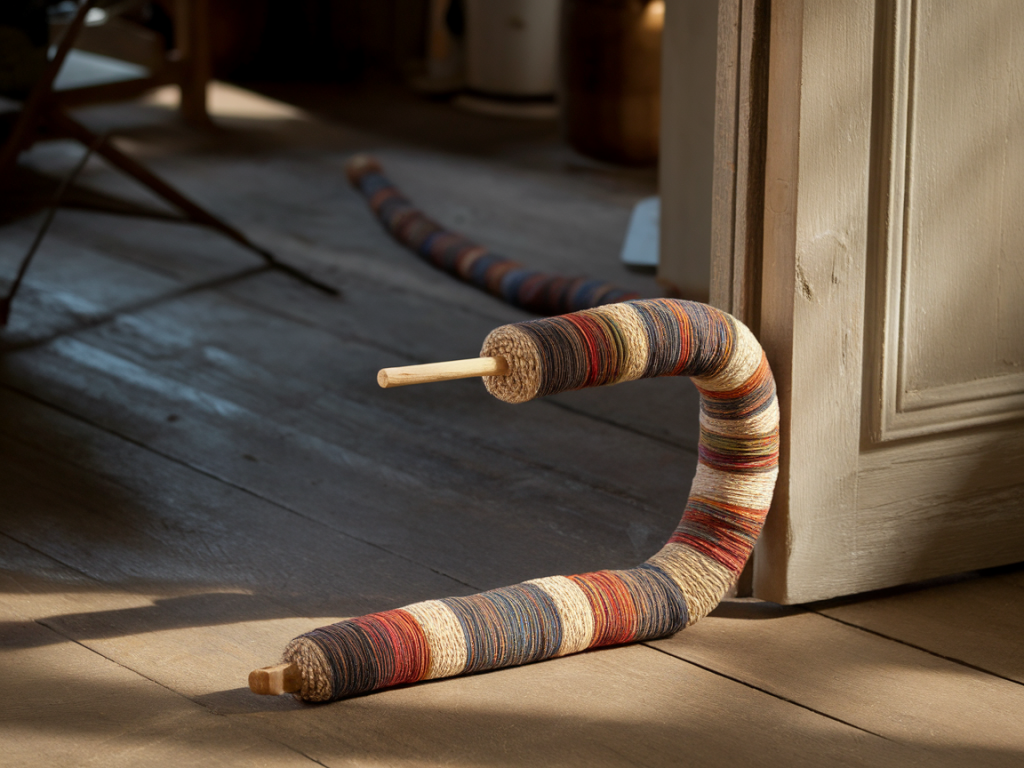
I have a soft spot for simple, low-waste solutions that make a home feel cozier — and a door snake is one of those small, satisfying projects that really delivers. When our old terraced house started to reveal the draughts under bedroom and bathroom doors, I wanted something narrow, natural, and made from materials I already had. This is my go-to method for making a draught-proof fabric door snake for narrow gaps using recycled wool and rice. It’s affordable, tactile, and surprisingly effective.
Why rice and recycled wool?
Rice makes an excellent weight for a door snake: it’s dense enough to sit tight against the floor and shifting a little when the door moves helps the snake stay in place. I often use rice I already have in the pantry or buy cheap bulk bags — it’s sustainable compared to plastic pellets and easy to replace if you ever need to. Recycled wool gives the snake a lovely textured look, insulates well, and is more eco-friendly than new synthetic fabrics. I usually raid my stash of felted jumpers, thrifted wool coats, or old wool blankets.
Note on safety: keep in mind that rice is an organic material and can attract pests or become musty in damp conditions. If you have concerns, consider using sand, millet, or glass pebbles as alternatives. Glass beads (sold as vase fillers) are a non-organic option, though they’re heavier and less eco-friendly.
What you’ll need
| Materials | Approx. amount |
| Recycled wool fabric (felted jumper, blanket, coat lining) | About 70–100 cm long x 10–12 cm wide |
| Uncooked rice (or alternative filling) | 1–1.2 kg depending on length |
| Thin cotton fabric for inner tube (old sheet or tea towel) | Same length as outer fabric, 6–8 cm wide |
| Thread and needle or sewing machine | — |
| Scissors, tape measure, pins | — |
| Spoon funnel (or paper cone) for filling | — |
Choosing dimensions for narrow gaps
Measure the gap under your door first. For narrow gaps (around 1–2 cm), I make a long, thin snake — about 70–90 cm long and 6–8 cm in finished diameter. The idea is to have a low profile that doesn’t get stuck when the door swings, but still covers the whole gap. If your doors are wider or you want to block more draught, increase the length or diameter.
Step-by-step: how I make mine
Styling tips and variations
Care and maintenance
If your inner tube is cotton and sealed, you can spot-clean the outer wool with a damp cloth. For a fully washable version, make the outer shell into a removable cover with a hidden zipper or button closure. Rice will absorb moisture if left in a damp environment, so air out the snake occasionally and replace rice every few years if needed. For households with pests, choose a non-organic filler like sand or glass beads.
Where I source materials
I prefer to use what I already have: an old jumper, a thrifted blanket or a linen curtain sample. For new but sustainable supplies, I recommend Liberty Fabrics for quality linen remnant pieces, or local charity shops for wool. Bulk rice can be bought in paper sacks from zero-waste shops or supermarkets — choose loose, refillable options when possible to cut packaging waste. For tools, a basic sewing kit from Hobbycraft or a small tailor’s needle set from Etsy sellers is all you need.
Troubleshooting
Making a draught-proof door snake is one of those projects that’s quick to do, kinder to the planet than many shop-bought alternatives, and customisable to your home’s style. It’s also a lovely way to give old textiles a new life and save on heating bills a little bit each winter — small changes, big comfort.