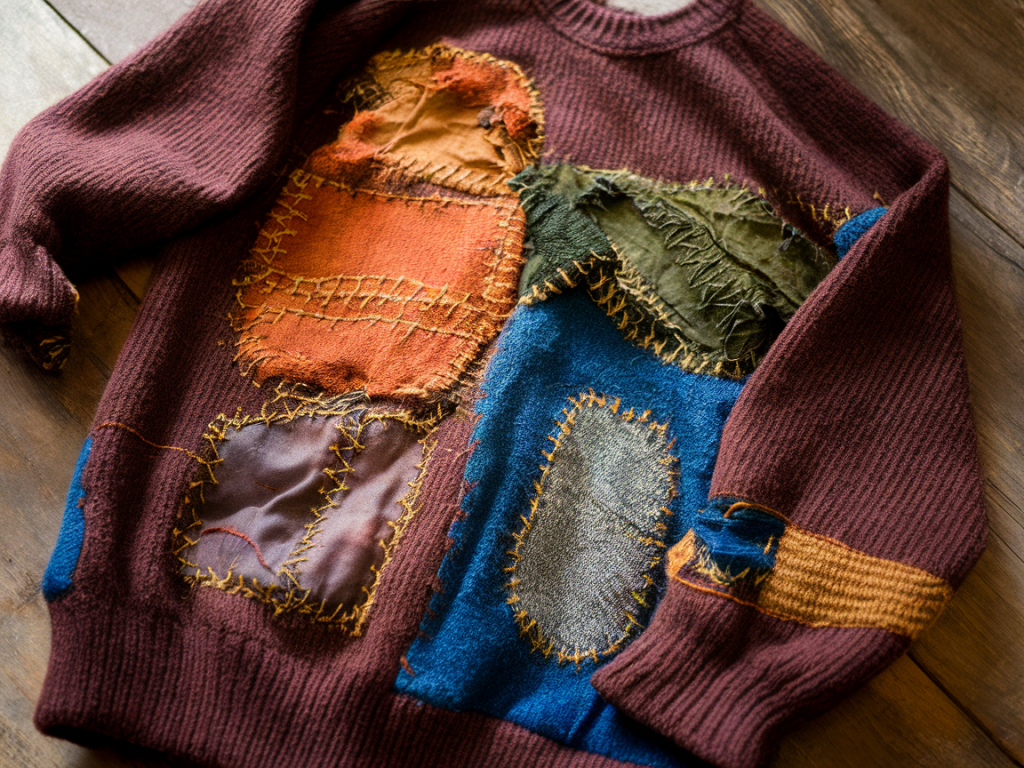
I’ve always been a bit sentimental about my jumpers — especially the wool ones that feel like a warm hug on grey afternoons. Over the years I’ve chosen repair over replacement whenever possible, and visible mending has become my favourite way to give a beloved wool jumper a new life while making the repairs part of the story. In this post I’ll share the tools I use, the techniques I reach for most often, and how to make a visible mend that looks intentional and even beautiful.
Why visible mending?
Visible mending does three important things for me: it keeps clothing out of landfill, it celebrates the life of an object rather than pretending wear never happened, and it adds a personal, handmade detail to an item that might otherwise be forgotten. There’s also something tender about choosing to highlight a worn elbow or a snag with colour and texture instead of hiding it away.
Tools and materials I keep on hand
Before starting any repair, I gather my materials. For wool jumpers I usually have:
- Darning needle — a blunt-ended, large-eye needle for ease with thicker yarns.
- Yarn — either matching wool from the jumper, a leftover skein, or a contrasting yarn for a bold visible mend. I often use 4-ply or aran wool depending on the jumper weight. Brands I like include Jamieson & Smith (for heritage colours) and Stylecraft (budget-friendly).
- Darning mushroom or egg — to stretch the fabric taut while I work; a wooden mushroom is my favourite for control.
- Sashiko needle and thread — for decorative hand-stitching; I use sashiko thread or perle cotton for contrast lines and geometric patterns.
- Embroidery scissors — small and precise for trimming loose fibres.
- Thimble — optional, but handy if your wool is dense.
Assessing the damage
First I turn the jumper inside out and look at the hole or worn area. Is the damage a clean hole, a thin worn patch, or a series of snags? For holes I check the surrounding fabric — if the surrounding stitches are slack, I’ll reinforce them first. Small worn areas can be stabilized with a light darning patch; larger holes benefit from an underpatch (a scrap of matching wool sewn inside) before visible stitching.
Basic darning for a natural look
When I want a subtle, almost discreet repair that still reads as handcrafted, I use a simple darning weave. Here’s how I do it:
- Place the darning mushroom under the hole and stretch the fabric lightly.
- Anchor your yarn a little way from the hole with a few stitches to avoid creating stress points.
- Weave parallel running stitches across the hole horizontally, covering the worn area and overlapping the stable stitches around it.
- Then weave vertically, going over and under the horizontal threads to create a woven patch.
This creates a textured, woven area that blends if you use a close colour match. If you choose a contrasting colour, it becomes a deliberate feature — a cosy patch that looks like a small tapestry.
Sashiko and decorative mending for intentional contrast
When I want the repair to be obvious and decorative, I reach for sashiko stitching or running stitch motifs. Sashiko creates rhythmic, geometric patterns that pair wonderfully with rolled cuffs and chunky knits.
- Trim any loose fibres and reinforce the inside of the jumper with a lightweight felt or a scrap of wool if the hole is large.
- Mark your pattern lightly with tailor’s chalk (small diamonds, concentric lines, or radiating stitches from the centre of the hole work well).
- Using sashiko thread or perle cotton, stitch evenly spaced running stitches across the patch. Aim for rhythm rather than perfection; the homemade quality is part of the charm.
I love using a natural creamy thread on charcoal grey wool or a bright mustard on deep green. The contrast sings without shouting.
Patching with knitted or woven fabric
For larger holes or thin elbows I sometimes knit a small patch (a rectangle a little larger than the damaged area) using similar gauge yarn and then sew it on as a visible patch. Another favourite is cutting a patch from an old wool sweater — either contrasting or tonal — and hand-sewing it with blanket stitch.
| Technique | When to use | Visual effect |
|---|---|---|
| Darning weave | Small holes, worn patches | Subtle, textured fix |
| Sashiko | Decorative repairs, reinforcing thin fabric | Graphic, intentional lines |
| Knitted or cloth patch | Large holes, elbows | Bold, tactile patchwork |
Colour and placement choices
Choosing colour is part instinct, part storytelling. If I want the jumper to keep a quiet look, I match tones as closely as possible. But when I want to celebrate the mend, I choose colours that complement the jumper’s palette — subtle terracotta on cream, or a dusty blue on oatmeal. Placement is important too: elbows, cuffs, and hem edges read as repair-friendly areas, so they’re natural places for visible mending. Sometimes I add a small, deliberate patch on the chest to create a focal point.
Finishing touches and care
After stitching, I trim loose ends, press very gently with a warm iron through a cloth if the wool tolerates it, and let the jumper rest on a flat surface for 24 hours so any stress in the fabric relaxes. For washing, I recommend hand-washing or a gentle wool cycle in a mesh bag and reshaping flat to dry. Treat the mend with the same gentle care you’d give the rest of the garment.
How to make visible mending feel intentional, not apologetic
Here are a few small design rules I follow to ensure the repair reads as an artistic choice rather than a compromise:
- Be deliberate with colour — choose either a close match or a complementary contrast, not random leftovers.
- Create repetition — add matching stitches or small patches elsewhere (a cuff or a pocket) so the repair looks like part of the jumper’s design.
- Balance texture — pair a smooth darning weave with a couple of embroidered lines for interest.
- Keep proportions right — avoid oversized patches on small holes; scale matters.
Visible mending has become one of my favourite rituals: a slow, thoughtful way to extend the life of things I love. Each repair is a tiny act of care — and a reminder that beauty can include history and wear.