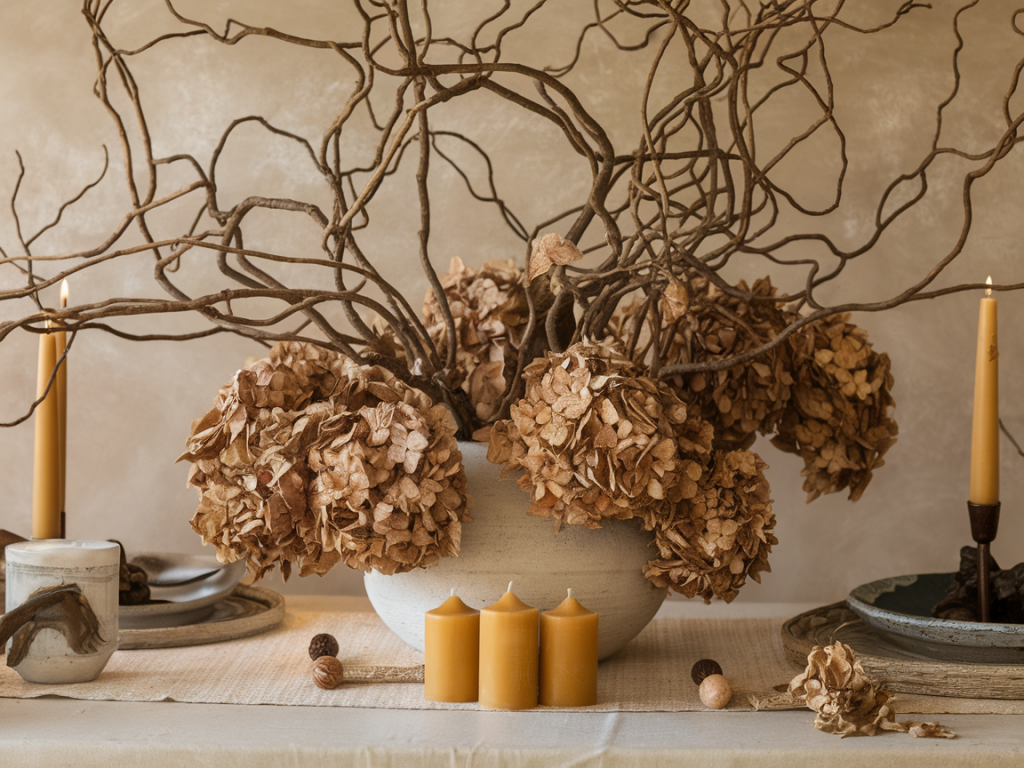
I love a table centerpiece that feels effortless, natural and slightly wild — something you can assemble in an afternoon with a few foraged finds, a bunch of dried hydrangeas and a handful of beeswax candles. This seasonal centerpiece leans into texture and warmth: twiggy branches create structure, dried hydrangea heads add soft colour, and beeswax candles give a gentle, honeyed light and a reassuring, slow burn. Below I’ll walk you through how I make mine, where I source materials, and a few styling and safety tips so it works for everyday meals and special occasions alike.
Why I choose branches, dried hydrangea and beeswax
Branches provide an architectural backbone without the formality of a vase arrangement. They’re free if you forage responsibly, or affordable from garden centres. Dried hydrangeas are forgiving: they keep their shape and colour for months, and their papery petals catch candlelight beautifully. Beeswax candles are my go-to for the table — they smell subtle and natural, burn cleaner than paraffin, and their warm golden hue complements the neutral palette of wood and dried flowers.
What you’ll need
- Branches (hazel, birch, willow or small apple/tree prunings) — varying lengths, 30–60cm works well for most tables
- Dried hydrangea heads — 6–12 depending on table length and how lush you want it
- Beeswax candles — tealights, tapers or pillar candles (I prefer tapers for dining tables)
- Low vases, jam jars or glass bottles to anchor branches
- Floral wire or twine (natural jute) to secure elements
- Scissors or secateurs, a shallow tray or runner to protect the table
- Optional: eucalyptus sprigs, preserved olive leaves, moss or pebbles for extra texture
Step-by-step: build your centerpiece
I often start by laying a simple runner — linen, cotton or a strip of kraft paper — to protect the table and define the central space. Then I gather the elements and work in layers.
1. Anchor the branches: Place low vases or jars along the centre of your table, spaced evenly. Fill the bases with a little sand, pebbles or water (if the branches are fresh) to hold them steady. Arrange branches in each vessel so they lean slightly outward, creating a graceful, horizontal silhouette rather than a vertical spike. I like varying heights so the eye moves along the table.
2. Add dried hydrangeas: Tuck dried hydrangea heads between the branches and around the vase mouths. You can wire the stems together into small bouquets first — that makes them easier to place and reposition. Aim for clusters rather than a continuous line; islands of flowers feel more relaxed and give room for plates and glassware.
3. Position the candles: Place beeswax tapers in simple candle holders, or use pillar candles on small saucers. I alternate single tall candles with groups of low tea-light beeswax candles in glass holders for a mix of height and glow. Keep candles at least 10cm away from any dried petals or foliage. If you’re worried about safety, use LED beeswax-effect candles (I recommend the warm-toned ones from brands like Root & Branch or IKEA’s realistic options) for a similar look without the flame.
4. Fill in with accents: Slip in eucalyptus or olive leaves for a hint of green, or scatter small clumps of sheet moss to add softness at the bases of the vases. Little ceramic bowls with walnuts, dried citrus slices or pinecones can add seasonal interest without getting in the way of place settings.
Simple variations for different occasions
- Informal family dinner: Keep it low and long — short branches, lots of hydrangea clusters and tea-lights so guests can see each other across the table.
- Small dinner party: Make two symmetrical clusters at either end of the table and use taller tapers in the centre for a sophisticated look.
- Holiday feast: Add sprigs of rosemary for fragrance, dried orange slices for colour, and brass candle holders for a festive touch.
Colour palette and texture ideas
Dried hydrangeas come in muted blues, blushes and warm neutrals — mix and match for depth. I often pair:
- Warm honey beeswax candles with golden-brown branches and cream hydrangeas for a cosy autumnal feel.
- Soft blue or mauve hydrangeas with birch branches and grey linen for a cool, winter palette.
- Stained or painted branches (use a light whitewash or gentle grey stain) with pale hydrangeas for a Scandi-inspired look.
Practical tips and safety
- Fire safety: Never leave burning candles unattended. Keep any dried flora at a safe distance and trim candle wicks to 5mm before lighting.
- Stability: Use sand or pebbles in vases to prevent tipping, especially if you have pets or children around.
- Longevity of dried hydrangeas: Keep them out of direct sunlight to avoid colour fading. If they become too fragile, a light mist of hairspray can help hold petals in place.
- Foraging responsibly: If you gather branches locally, prune from your own garden or seek permission — avoid stripping live branches from public hedgerows.
Where I source materials (UK-friendly)
I forage what I can — hazel and willow are great for structure — then top up with responsibly sourced items. A few places I use:
- Local markets and charity shop jars for inexpensive vases.
- Flower wholesalers or local florists for dried hydrangea — also try Etsy sellers who specialise in preserved flowers like Dried Flower Collective or Fleurs Secs UK.
- Beeswax candles: I often buy from small makers such as Beeswax Co. or Scottish beeswax candlemakers; for affordable options try Neal's Yard Remedies or The White Company for luxe tapers.
- Garden centres for willow or hazel prunings, or Wilko for basic tools and twine.
Quick troubleshooting
If your arrangement looks too sparse, add a few more short branches horizontally to bridge gaps and create a fuller silhouette. If the hydrangeas overwhelm the branches, trim the flower heads back slightly and cluster them closer to the vases rather than spacing them along the whole runner.
This is the kind of table dressing I return to again and again: low-cost, low-fuss, and full of character. It’s perfect for seasonal meals, easy to adapt to what’s available, and kinder to the planet than buying trendy, single-use decor. If you try it, I’d love to see your versions — tag Take Root Design on Instagram or drop a photo via the contact page at takerootdesign.co.uk.