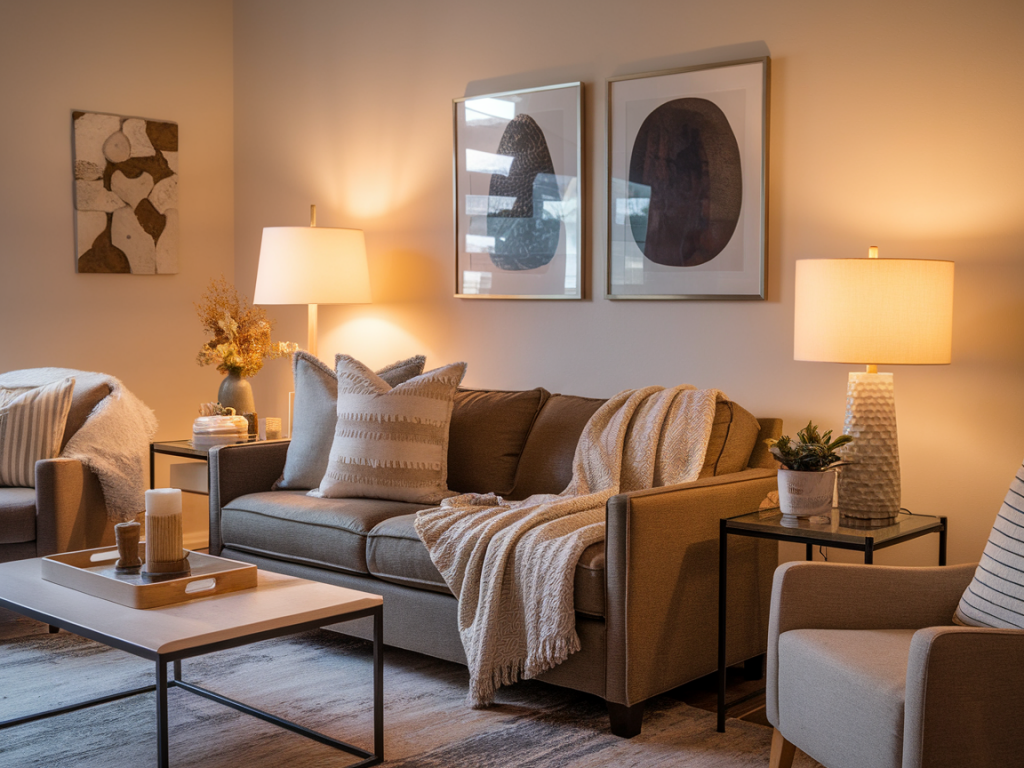
I moved into my tiny one-bedroom flat in the UK with the same mindset I had in that small Parisian apartment where I learned to make every centimetre count: keep things cozy, practical and gentle on the planet. Winter asks for a different kind of attention — softer light, warmer textures, and a layout that invites lingering. Below I’ll walk you through how I style a compact living room for the colder months, including layout tips, how to layer textiles for real warmth and comfort, plus a realistic £50 lighting upgrade that completely transforms the atmosphere.
Think in zones, not rooms
In a small living room, a clear layout instantly makes the space feel larger and more deliberate. Rather than trying to fit a “living room” checklist, I define zones: a seating/relaxing zone, a small work or craft corner (if needed), and clear circulation paths. Even if all of these overlap, the sense of purpose keeps the room calm.
- Anchor the seating — use a rug to define where the sofa and main chair sit. A rug creates a visual boundary that makes the sitting area feel intentional.
- Keep sightlines open — choose low-profile furniture near walkways so there’s no visual clutter; even a slim console or floating shelf can replace a bulky cabinet.
- Flexible furnishings — a pouf or small bench can double as extra seating or a footrest. I always look for pieces that do two jobs.
Practical layout examples
Here are three layouts I use depending on the shape of the room:
| Room shape | Layout idea | Why it works |
|---|---|---|
| Long and narrow | Place sofa along long wall, small round coffee table, accent chair near window | Maximises floor space and keeps circulation clear |
| Square | Sofa facing TV/feature wall, compact armchair at angle, rug centered | Creates a cosy conversation area without dead corners |
| Open-plan to kitchen | Back of sofa as room divider, slim console behind sofa, floating shelf | Defines zones without walls and keeps light flowing |
Layered textiles: the heart of winter cosiness
Textiles make the biggest sensory difference when the days are grey and cold. I always layer from the floor up and think in materials and scale:
- Rug first — even a small rug under the front legs of the sofa grounds the space and adds thermal insulation. I prefer natural fibres like wool or jute for warmth and texture; Dunelm, John Lewis and small wool-weaving makers on Etsy are good sources.
- Throw blankets — keep one chunky knit and one lighter cotton or linen throw in a basket near the sofa. Wool or wool-blend throws give serious warmth; I’ve had good luck with thrifted blankets or affordable finds from H&M Home and Habitat.
- Cushion layering — mix sizes and textures: 65cm square linen, 45cm velvet or corduroy, a lumbar cushion in wool. Aim for an odd number on the sofa (3 or 5) so it looks effortless rather than staged.
- Window softening — add a thermal-lined curtain or a heavy linen curtain in a warm tone. They increase insulation and create a backdrop that feels snug.
Tip: Keep a small basket of seasonal blankets close to your reading spot. It’s the small, convenient touches that make you actually use these layers.
Natural materials and colour palette
Winter doesn’t have to be dark. I lean into a muted palette with warm accents: soft creams, muted greens, clay terracotta and deep ochre. Natural materials — wood, clay, wool, rattan — add visual warmth even on overcast days. If you’re keeping costs low, look for second-hand wooden side tables or repaint thrifted furniture in a warm, matte tone.
Low-waste DIY touches
I love adding small handmade touches that cost little but look considered:
- Make a simple macramé plant hanger for a trailing houseplant — adds life and texture.
- Upcycle a thrifted lampshade with natural dye or a linen cover.
- Create seasonal wreaths from foraged twigs, dried grasses and eucalyptus for the wall or mantel.
My go-to £50 lighting upgrade
Good lighting is the single most transformative element for winter. It changes mood, makes a room feel bigger at night and encourages relaxation. You don’t need expensive fixtures to make a dramatic difference — here’s a step-by-step £50 plan I often use:
- Step 1 — Swap to warm bulbs: Replace any cool white bulbs with warm white (2700K–3000K). I buy warm LED bulbs in multipacks from IKEA (e.g. the LEDARE range) or Amazon for about £6–£10. Warm light immediately feels more inviting.
- Step 2 — Add a plug-in dimmer: If your main light isn’t dimmable, a plug-in inline dimmer for table or floor lamps costs around £10–£15 and lets you lower intensity without rewiring. Available at B&Q or Amazon.
- Step 3 — Introduce a statement lamp: For around £25–£30 you can buy a simple floor lamp (IKEA HEKTAR or RANARP often sit in this price bracket) or a vintage lamp from a charity shop. A warm-shaded lamp next to the sofa gives a pool of light perfect for evenings.
- Optional extras: Add a string of warm LED fairy lights or a small battery-powered LED candle for £5–£10 to create layered pools of light.
Example budget breakdown:
| Warm LED bulbs (pack) | £8 |
| Inline dimmer | £12 |
| Simple floor/table lamp | £25 |
| Total | £45 |
This upgrade produces layered light: general soft ambient light, a dimmed overhead for gatherings, and a cosy task lamp for reading. The difference in atmosphere is immediate — suddenly the room feels like a refuge instead of a multifunctional box.
Styling the surfaces
Resist the urge to fill every surface. A few considered objects make more impact: a stack of favourite books, a small clay vase with dried stems, a candle on a wooden tray. Use trays to corral items and maintain a tidy look with minimal effort. I like mixing antiques with affordable finds — a thrifted ceramic cup looks brilliant next to a new textured candle holder.
Plant care in winter
Even in winter, a bit of greenery lifts the room. Choose low-light, low-maintenance plants: snake plant, ZZ plant, or pot up a small eucalyptus for scent. Rotate and dust leaves occasionally so they continue to brighten the room without needing constant attention.
If you want help adapting these ideas to your specific layout (measurements, photos, or budget), I’m always happy to offer tailored tips — message me via the contact page on Take Root Design (https://www.takerootdesign.co.uk). Whether you’re a renter or a new homeowner, small, intentional changes will make your living room feel like the cosy, sustainable nest you want this winter.