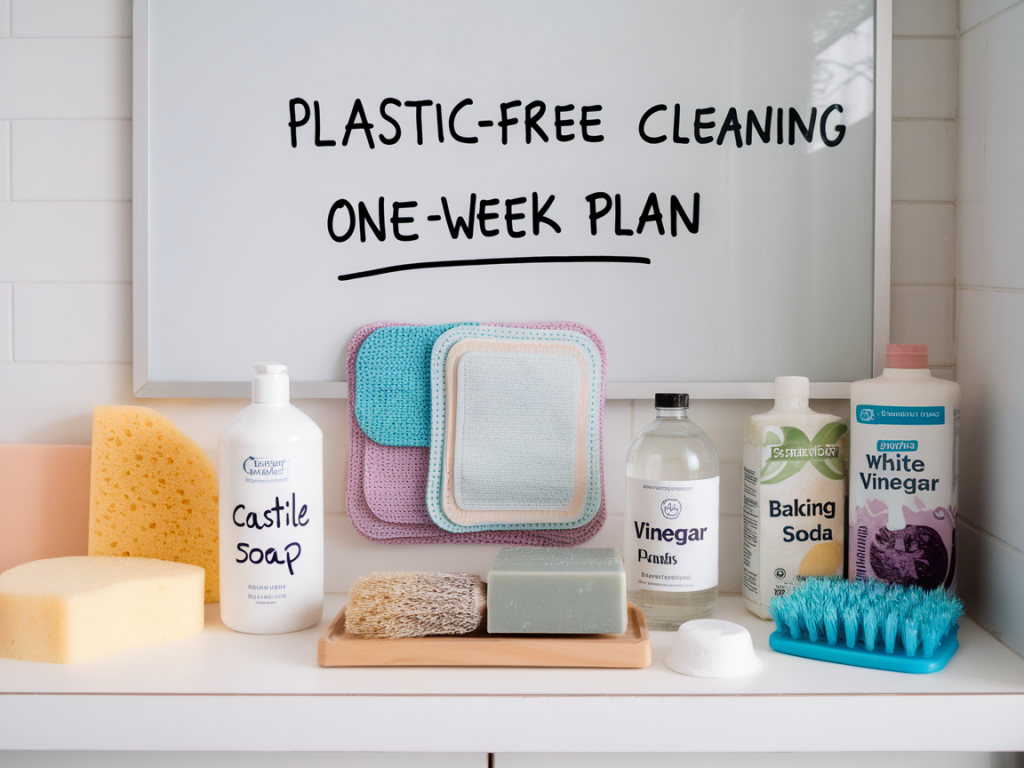
I’m sharing a practical, one-week plan to switch your home cleaning routine to plastic-free options — the exact products I use, simple DIY recipes I test at home, and little habits that make the change stick. This is meant to be realistic: you don’t need to replace everything on day one, and you don’t need to buy expensive “zero-waste” extras to begin. I swap things room by room and prioritize refillable, reusable, or biodegradable choices.
Why I switched (short and practical)
Plastic avoidance in cleaning isn’t just about reducing waste; it’s about choosing concentrates, solid formats, and refill systems that reduce transport and packaging, and often cost less in the long run. I’ve found the best changes are the ones that feel easy and effective. Below you’ll find a seven-day plan and the exact products and recipes I use — all tested in a real home with plants, pets, and muddy boots.
Quick list of essentials to get started
- Reusable spray bottles — amber glass bottles with trigger sprayers for all-purpose and glass cleaners.
- Solid cleaning bars — washing-up bars and multi-purpose soap bars (look for local soap makers or brands in cardboard).
- Refill pouches or cardboard-packed concentrates — for laundry and dish, such as Faith in Nature refill pouches or Ecover refill cartons.
- Cleaning cloths — unbleached cotton rags, old linen, and Swedish dishcloths (cellulose & cotton; compostable).
- Natural scrubbers — coconut fibre scourers or loofahs, and a wooden-handled dish brush (Redecker-style).
- Glass & mirror tiles — a squeegee on a small scale and a glass bottle with a vinegar solution.
One-week swap plan
Do one room or task per day. Pause and test before replacing everything.
- Day 1 — Kitchen (dishes and surfaces)
Replace liquid dish soap in plastic with a washing-up bar or an eco-friendly refill pouch. I use a local washing-up bar (cardboard packaging) and a coconut fibre scourer for heavy grease. For surfaces, make an all-purpose spray in a glass bottle: 500 ml water + 50 ml white vinegar + 10 drops of essential oil (optional). For stuck-on grime, sprinkle bicarbonate (baking soda) and scrub with a damp cloth. - Day 2 — Laundry
Switch to laundry strips or cardboard-packed detergent. I use Tru Earth laundry strips (low packaging) or Ecover refill pouches in the UK; both cut down on plastic bottles. For stain pre-treatment, a paste of baking soda + a little water works well. Wash at 30–40°C where possible to save energy. - Day 3 — Bathroom (bath, sink, toilet)
Replace toilet cleaner in a plastic bottle with baking soda + vinegar for a weekly deep-clean: sprinkle bicarbonate, add vinegar, let fizz, then scrub. For tiles and sinks, a soap bar diluted with hot water becomes a gel you can use in a small glass jar. For mirrors, use a 1:1 water:vinegar mix in a glass spray bottle and polish with a lint-free cotton cloth. - Day 4 — Floors
Use castile soap or a small amount of concentrated floor soap diluted in a bucket of water rather than pre-mixed floor cleaners in plastic. I keep a wooden mop and washable cotton mop pads or a microfibre (long-life) alternative if needed. - Day 5 — Glass, mirrors and polishing
Make a glass cleaner: 250 ml water + 250 ml white vinegar + 1 tbsp rubbing alcohol (optional for faster drying). Spray on and wipe with crumpled newspaper or a clean cotton tea towel. - Day 6 — Deep clean & cupboards
Empty one cupboard and replace plastic bottle cleaners with refill pouches or solids. Place refill cards or labels on new bottles so you remember the mix. Use bicarbonate and lemon for cupboards and drawers to neutralize smells. - Day 7 — Maintenance and refill day
Refill glass bottles from concentrates or bulk stations. Wash and dry cloths and brushes. Inventory what worked and what didn’t — then tweak.
Exact products I use (and why)
| Product | Use | Packaging note |
| Washing-up bar (local soapmaker or cardboard-wrapped brand) | Everyday dishwashing | Cardboard or paper wrapping — plastic-free |
| Tru Earth laundry strips | Laundry (no plastic bottles) | Cardboard mailer |
| Ecover / Faith in Nature refill pouches | Laundry, some surface cleaners (refill) | Lower-plastic refill pouches (check local listings) |
| Swedish dishcloths (cellulose & cotton) | Wiping surfaces & dishes | Biodegradable |
| Redecker wooden dish brush + coconut head | Scrubbing pots and pans | Wood and natural fibre — compostable head |
| Amber glass spray bottles | All-purpose, glass cleaners | Reusable |
| Bicarbonate of soda & white vinegar | All-purpose scrubs and descales | Often sold in cardboard or paper-lined packaging |
DIY recipes I use every week
Simple, inexpensive, and effective — these are the ones I test first.
- All-purpose spray: 500 ml water + 50 ml white vinegar + 10 drops of lemon essential oil. (Do not use vinegar on natural stone — use castile soap instead.)
- Glass cleaner: 250 ml water + 250 ml white vinegar + 1 tbsp rubbing alcohol. Wipe with a lint-free cloth for streak-free shine.
- Bicarbonate paste: 3 parts baking soda + 1 part water. Great on sinks, ovens, and stubborn stains — let sit, then scrub and rinse.
- Floor cleaner: 1 tsp liquid castile soap in 5 litres of warm water. Mop as usual and rinse mop pads in hot water.
Practical tips that helped me stick with it
- Start small — changing the dish soap and the spray bottle first gives fast wins.
- Label everything — I label glass bottles with the date and recipe so I don’t mix solutions.
- Keep a small testing stash — if a DIY mix doesn’t work on a surface, return to a refill product rather than buying a new plastic bottle.
- Refill locally — look for zero-waste shops and refill stations in your area, or buy concentrates in cardboard where available.
- Be mindful of surfaces — avoid vinegar on marble, granite or natural stone; use pH-neutral soap instead.
If you’d like, I can put together a printable shopping list for local UK refill stores, or share links to the exact suppliers I use in the shop section of Take Root Design (https://www.takerootdesign.co.uk). Tell me which room you want to start with and I’ll tailor a one-week plan and shopping list just for that space.