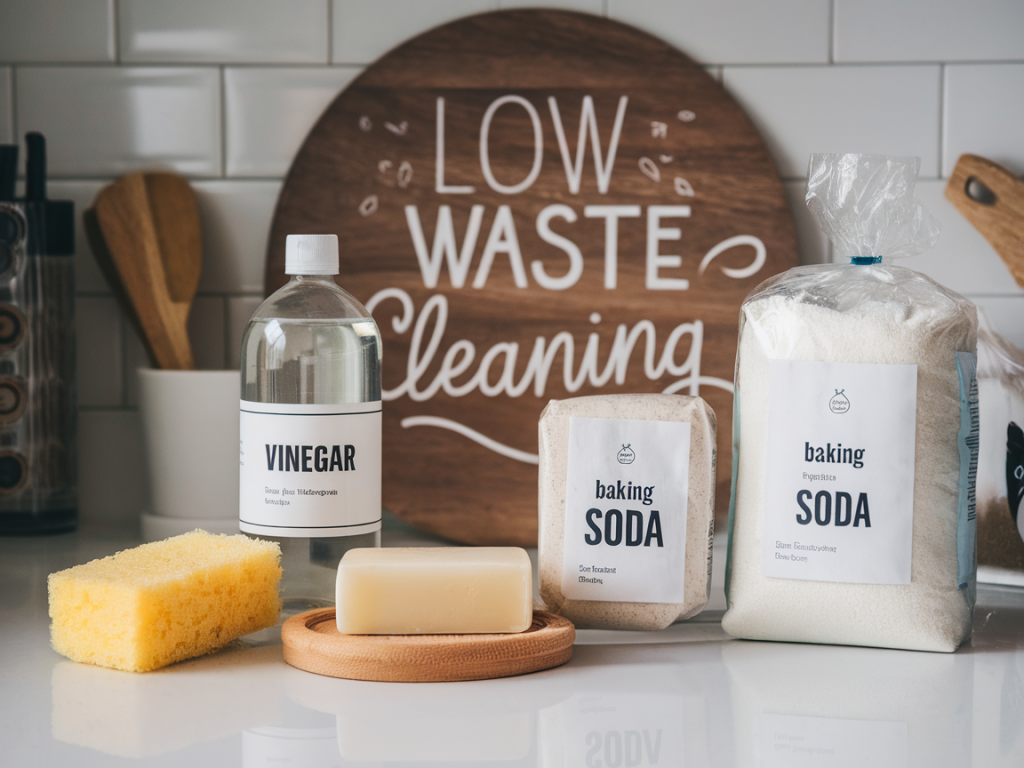
I love the idea of a low-waste kitchen that still feels clean and safe. Over the years I’ve swapped a cupboard full of single-use wipes and plastic bottles for a small selection of thoughtful products and DIY solutions. I also tested what actually disinfects — because “natural” doesn’t always mean effective against germs. Below I share what I use, what I tested, and a practical one-week plan to help you switch with confidence.
What counts as “disinfecting” — and why it matters in the kitchen
Cleaning, sanitising and disinfecting are often used interchangeably, but they’re not the same. I approach the kitchen like this:
For everyday use I mostly clean and sanitise, reserving disinfecting for high-risk moments. That means choosing products that genuinely kill germs when necessary, but avoiding overuse of harsh chemicals.
Low-waste options that actually disinfect (what I trust)
I’ve tested these personally on surfaces around my kitchen — countertops, handles, chopping boards, and sinks. I focus on concentrated, refillable, or multi-use solutions.
I keep a small spray bottle of 70% isopropyl alcohol for quick disinfecting. Alcohol at 70% is effective against many bacteria and enveloped viruses. It evaporates quickly, so you need to ensure the surface stays visibly wet for at least 30 seconds to a minute (check product guidance). I decant a 500 ml refill into a reusable amber bottle and label it.
3% hydrogen peroxide is a gentle, effective disinfectant for many surfaces. It’s oxygen-based, breaks down into water and oxygen, and is low-waste if bought in recyclable bottles. I use it on non-porous counters and for cutting boards — apply, leave for at least one minute, then wipe. Avoid prolonged contact with coloured fabrics as it can bleach.
Good old dish soap doesn’t disinfect but it removes grease and reduces microbes effectively when combined with scrubbing and hot water. I use a refillable pump or a bar soap (zero-waste dish bars) for washing counters and dishes before any sanitising step.
Sodium percarbonate (oxygen bleach) dissolved in hot water is great for whites, grout, and deep-cleaning chopping boards. It’s sold as a powder in recyclable or compostable packaging from brands like Ecover or in bulk from refill stores.
Some eco brands now make EPA- or UK-equivalent-listed disinfectants (look for "+Virucidal" or "BSEN 1276" type claims). I’ve had good results with Method Antibac (on specific bacteria claims) and some products from Seventh Generation. Always check the label for proven claims and contact time. These come in concentrated refills or refill pouches, which cuts down plastic.
Natural myths: what doesn’t reliably disinfect
I used to rely on vinegar and essential oils — they smell wonderful and are great for cutting grease — but they don’t meet the standard for disinfecting in the kitchen.
If you prefer natural products, use them for everyday cleaning and follow with a proven disinfectant when needed.
How I test efficacy at home (simple checks)
I don’t have lab equipment, but I adopted practical tests:
One-week low-waste disinfecting plan (practical, no-fuss swaps)
Use this plan to transition over a week. Aim to use refillable bottles, bulk powders, and multi-purpose products to reduce packaging waste.
| Day | Task | Product/Swap |
| Day 1 | Declutter countertops; deep clean all surfaces | Soap + hot water (refillable soap), then 3% hydrogen peroxide spray on counters |
| Day 2 | Refresh chopping boards and knives | Scrub with soap, rinse, then soak or spray with 3% H2O2 or diluted sodium percarbonate for 1 minute |
| Day 3 | Deep clean sink and drain | Sodium percarbonate soak + scrub; rinse; use vinegar for smell only (not as disinfectant) |
| Day 4 | High-touch spots (handles, switches) | 70% isopropyl alcohol in reusable bottle — ensure 30–60s contact |
| Day 5 | Appliance handles & fridge interior | Soap clean, then eco-certified disinfectant (refill pouch preferred) |
| Day 6 | Soft surfaces (tea towels, dishcloths) | Hot wash cycle (60°C) + line dry; swap to unbleached cotton towels to reduce replacements |
| Day 7 | Maintenance tidy + restock refills | Top up concentrates (eco disinfectant concentrate, hydrogen peroxide), refill spray bottles, compost any soiled cloths |
Practical tips for low-waste disinfecting
Switching to low-waste disinfecting doesn’t mean compromising safety. By using a small toolkit — soap, alcohol, hydrogen peroxide, and oxygen bleach — and choosing refillable, certified products when needed, you can keep your kitchen both hygienic and kind to the planet.