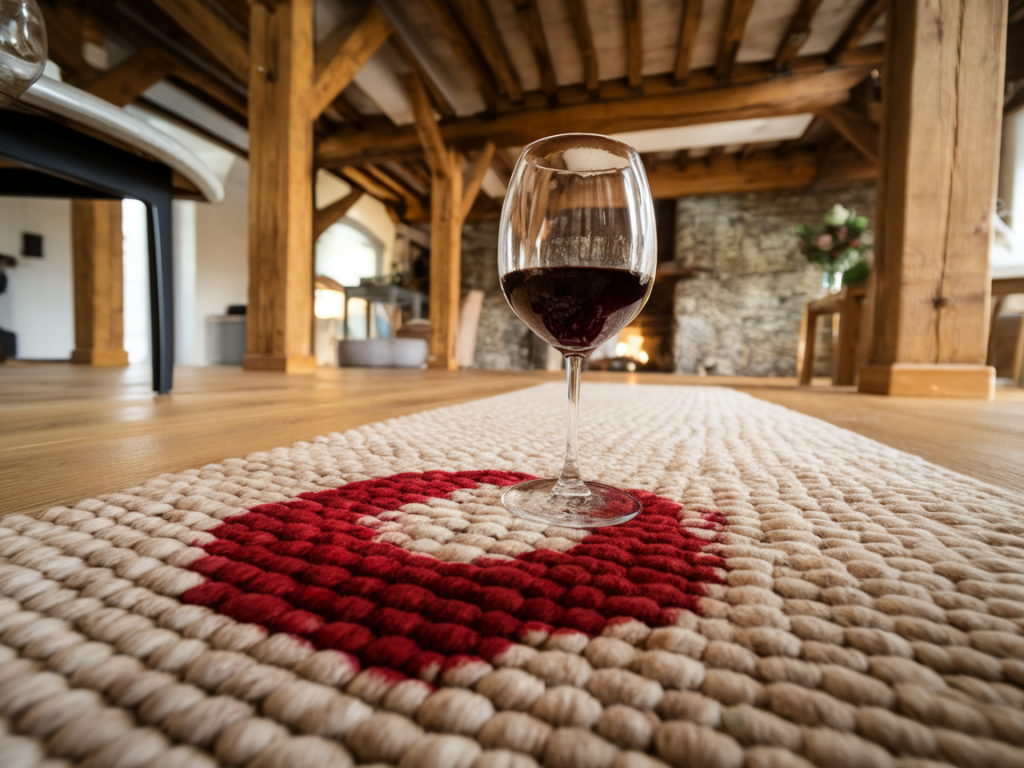
Red wine on a wool rug feels like a small domestic disaster — especially when the rug is a soft, hand-me-down piece you love. Over the years I've tried everything from frantic blotting to carefully mixed home remedies. For this post I set up a calm, repeatable test to answer a practical question: which natural stain remover actually lifts red wine from wool rugs? I tested several gentle, low-waste approaches so you can choose a method that respects both your wool and the planet.
Why wool needs special care
Wool is a protein fiber (like hair), so it reacts differently to cleaners than cotton or synthetic rugs. Harsh alkaline cleaners, strong bleaches, or excessive scrubbing can cause felting, color loss, or shrinkage. My goal was to use mild, food-safe or plant-based ingredients: white vinegar, baking soda, club soda, hydrogen peroxide (diluted), and an enzyme cleaner marketed as eco-friendly. I also included a commercially available "natural" stain remover so you can see how a ready-made product compares.
What I tested
- Plain cold water (control)
- Club soda (fizzy water)
- White vinegar + cold water (1:2)
- Baking soda paste (baking soda + water)
- Diluted hydrogen peroxide (3% H2O2, 1 part to 3 parts water)
- Eco-friendly enzyme cleaner (brand tested: Ecover Stain Remover)
- Commercial “natural” wool stain remover (brand tested: Wool & Cashmere Shampoo — used as spot treatment)
Test setup and safety
I used a small offcut of a natural-dyed, 100% wool rug (never washed) to keep the test realistic. I measured consistent spots using a syringe to drop 1 teaspoon of red wine (a mid-range Pinot Noir) on clean, dry fibers and let the wine set for 10 minutes to simulate a typical accidental spill. For each treatment I used the same technique: blot with a white cotton cloth (no rubbing), apply the treatment, let it sit for the specified time, blot again, rinse gently with cold water, and air-dry flat. I photographed the spots before and after.
Safety notes: I wore gloves when mixing hydrogen peroxide, and always tested each solution on an inconspicuous area first for color fastness. Never use hot water on protein fibers — it can set stains.
Step-by-step for each method
Below I outline the exact steps I used so you can repeat them at home.
Plain cold water (control)
Blot immediately with a clean cotton cloth, dabbing from the outside of the stain toward the middle. Rinse the cloth and repeat until no more wine transfers. Result: partial lift — the deepest pigmentation remained as a faint pinkish shadow.
Club soda
Pour a small amount of club soda onto the stain, let fizz for 1–2 minutes, then blot. Repeat twice. Result: similar to cold water, slightly better at lifting fresh spills, but not very effective on set-in stain.
White vinegar + water (1:2)
Mix one part white vinegar to two parts cold water. Blot the stain with the solution, leave for 5 minutes, then blot dry and rinse with cold water. Result: improved lifting of wine pigmentation compared with water alone; slight dulling of surrounding dye on one test patch (always spot-test first).
Baking soda paste
Mix baking soda with a few drops of water to make a spreadable paste. Gently spread over the dried stain and leave for 30–60 minutes, then brush off and vacuum, followed by a cold-water blot. Result: absorbed some pigment and dried residue, but left a mild white cast if not fully rinsed — effective as a pre-treatment before rinsing.
Diluted hydrogen peroxide (1:3)
Apply diluted 3% hydrogen peroxide, let sit for 5–10 minutes, then blot and rinse thoroughly. Result: noticeably effective lifting of deep red stains. On my sample the majority of the stain was gone, leaving only a faint tint. Important caveat: hydrogen peroxide is a mild bleaching agent and can lighten natural dyes — always test first and use sparingly.
Eco-friendly enzyme cleaner (Ecover)
Spray according to instructions, let sit for 10 minutes, blot, and rinse. Result: very good performance on set stain, with minimal impact on wool texture and color. Enzymes help break down organic pigments and often work well without bleaching. This was one of the best balance options for efficacy and fiber safety.
Wool-specific commercial cleaner
Using a small amount of Wool & Cashmere Shampoo diluted and applied as a spot treatment, I let it sit for 5 minutes, then rinsed. Result: modest improvement; not as effective as peroxide or enzyme cleaner alone, but extremely gentle with no change to fiber hand or dye.
Results at a glance
| Method | Ease | Effectiveness | Risk to wool/dye |
|---|---|---|---|
| Cold water | Very easy | Low | Minimal |
| Club soda | Very easy | Low–Medium | Minimal |
| Vinegar + water | Easy | Medium | Low (test first) |
| Baking soda paste | Easy | Medium (as pre-treatment) | Low (residue risk) |
| Diluted hydrogen peroxide | Moderate | High | Medium (bleaching risk) |
| Eco enzyme cleaner (Ecover) | Easy | High | Low |
| Wool-specific cleaner | Easy | Low–Medium | Very low |
What I recommend
If you catch the spill right away: start with cold water or club soda and blot, then follow with an enzyme cleaner if any color remains. For set-in stains where you want a natural approach, try an enzyme cleaner first — it was nearly as effective as diluted hydrogen peroxide but far gentler on dyes and fiber.
Use diluted hydrogen peroxide only as a last resort and always test first. It's the most powerful household solution I tested for lifting deep red pigment, but it has a real risk of bleaching natural dyes on wool.
Practical tips from my tests
- Blot — don't rub. Rubbing pushes the pigment deeper and mats the fibers.
- Work from the outside in to avoid spreading the stain.
- Always test on an unseen edge for color fastness before treating a visible area.
- If you're worried about watermarks, dab with minimal moisture and dry with a fan or gentle air flow rather than heat.
- For valuable rugs, consider professional cleaning if the stain is large or very old.
Stain emergencies are stressful, but with a calm approach and the right gentle solutions you can often rescue a wool rug without harsh chemicals. My own preference now is to keep a small bottle of an eco enzyme stain remover on hand for everyday mishaps, and reserve diluted hydrogen peroxide only when everything else fails and I've spot-tested safely.