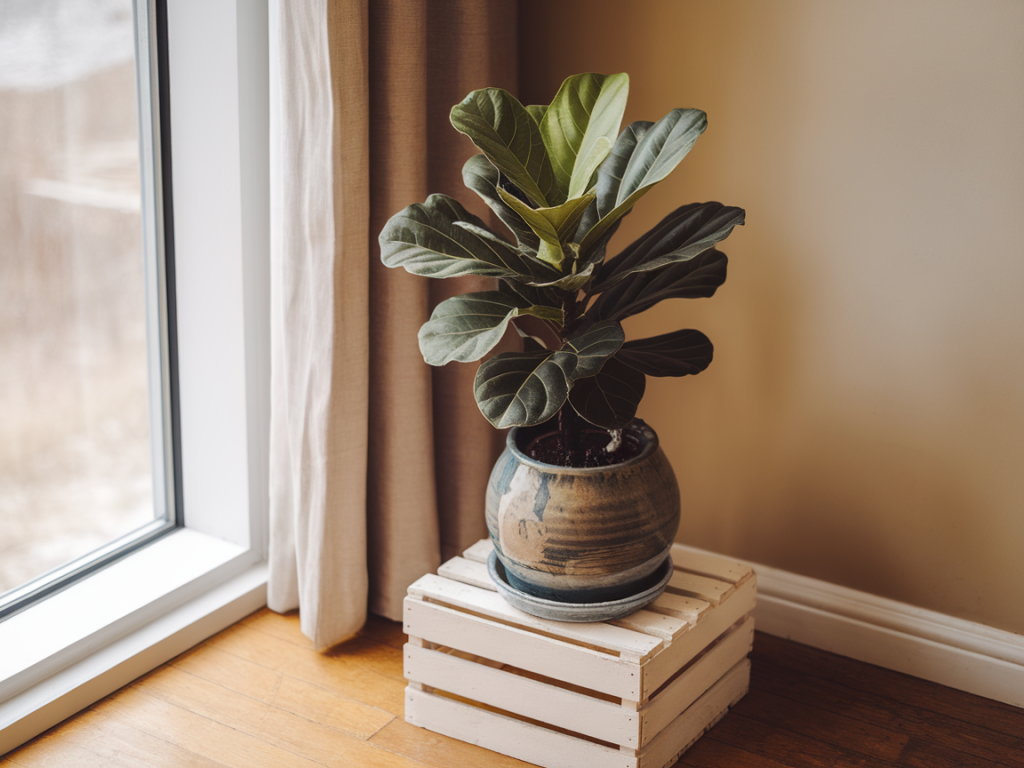
I keep my fiddle leaf fig (Ficus lyrata) by a single north-facing window — proof that you can grow one without a southern suntrap. It hasn’t been flawless, but over the years I’ve learned a few reliable tricks that keep it healthy, happy, and in keeping with my slow, sustainable approach to houseplants. If you have one in similar conditions, here’s a practical, honest guide to making the most of low light while prioritising simplicity and resourcefulness.
Understand what a north-facing window means for your fiddle
A north-facing window in the UK gives bright, indirect light for much of the day but rarely direct sun. For a fiddle leaf fig, this means slower growth and sometimes legginess, but it also reduces the risk of scorched leaves — a common worry with direct afternoon sun. The plant is adaptable; it will grow more slowly, and you’ll need to make up for the lower light with a few small adjustments.
Assess the light and adapt
Start by spending a day observing the window. Note how many hours of useful light arrive (not just daylight). I use a simple phone app to measure light levels on occasion, but you can also watch how shadows fall and whether the room feels bright enough to read in the daytime without artificial light. If the light is very dim (under ~500 lux), consider:
Soil, pot and drainage — sustainable choices that matter
Fiddles hate being waterlogged, especially in lower light when the soil dries slowly. I always use a free-draining, airy mix: good quality compost rescued from my garden waste bin, mixed with perlite or coarse sand and a handful of bark or coco coir to keep structure.
Watering in low light — less is more
One of the biggest mistakes I made early on was overwatering. In a north-facing spot the fiddle uses less water, so you’ll need to wait longer between waterings. My simple method:
Humidity and temperature — easy, low-tech options
Fiddle leaf figs appreciate humidity but you don’t need an expensive humidifier. I boost humidity in a few sustainable ways:
Keep temperatures fairly steady (ideally 16–24°C). North-facing rooms can be cooler, so avoid drafts from windows or external doors.
Feeding — don’t overdo it
Less light = lower growth, so you won’t need heavy feeding. I feed lightly in spring and summer with a balanced, gentle houseplant fertiliser (look for slow-release or organic options like seaweed-based feeds) and stop in autumn and winter. Over-fertilising can cause salt build-up and leaf tip burn, especially if water uptake is slow.
Pruning, shaping and encouraging growth toward light
Fiddles in low light often lean toward the brightest spot. Rotate the pot regularly so growth remains balanced. If your plant becomes leggy, prune a few stems to encourage branching — this also helps keep it compact for a smaller room. I save cuttings for propagation; they root easily in water or a light potting mix, and it’s a lovely, low-waste way to multiply a plant you love.
Spotting and treating common problems
Here’s a quick table of issues you’ll likely encounter and what to do:
| Symptom | Likely cause | Action |
|---|---|---|
| Yellowing lower leaves | Overwatering or natural leaf drop | Check moisture, reduce watering, remove dead leaves |
| Brown crispy edges | Low humidity or under-watering | Increase humidity, water deeply if soil is dry |
| Brown soft patches | Root rot from waterlogged soil | Inspect roots, trim rotten parts, repot in fresh mix |
| Sticky residue / sooty mould | Pests (aphids, scale) | Wipe leaves with soapy water, treat with neem oil if needed |
| Leggy growth / leaves sparse | Insufficient light | Move closer to window, add supplemental LED light |
Pests and prevention
Pests like spider mites and scale can show up in drier, warmer homes. I inspect leaves regularly (especially the undersides), wipe them down with a damp cloth, and use a mild neem oil spray as prevention. If you find pests, isolate the plant and treat promptly — natural insecticidal soaps are effective and align with a low-tox approach.
Styling tips that keep the plant happy and your room looking cosy
Because growth is slower, find ways to make the plant feel intentional in the room:
When to consider an alternative
If you want a more robust plant for a dim north window, consider alternatives like Zamioculcas zamiifolia (ZZ plant), Sansevieria (snake plant), or Aglaonema. They tolerate low light exceptionally well and require minimal fuss, but if you love the sculptural drama of a fiddle leaf fig, the tips above will help you keep one thriving even in a single north-facing window.
Growing a fiddle leaf fig in modest light is a lesson in patience and attentive care. With simple adjustments — better drainage, careful watering, occasional supplemental light, and small humidity boosts — your fiddle can be a calm, beautiful presence in your home. If you’d like, I can share my favourite low-energy LED panels or a simple soil mix recipe next.