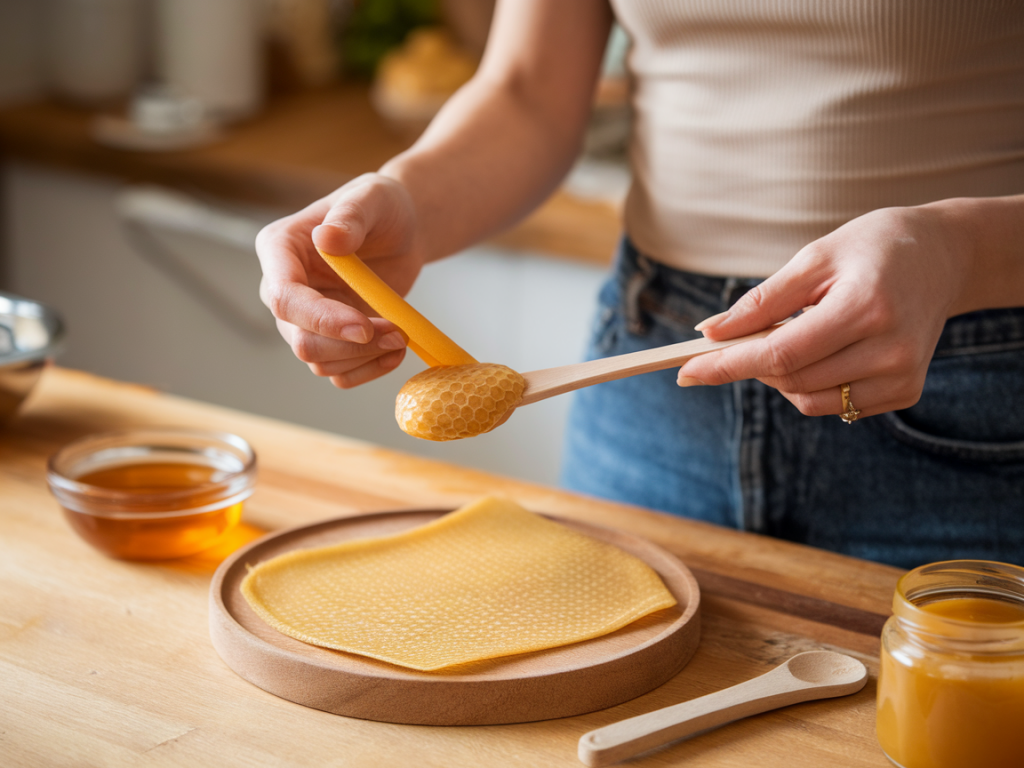
I’ve been making beeswax wraps for years — testing ratios, trying different oils and fabrics, and learning what keeps them soft and flexible instead of brittle and cracked. I make them for my kitchen, for gifts, and to replace cling film whenever possible. Below I’ll share the exact method I use, why each ingredient matters, and how to troubleshoot common problems so your wraps stay pliable and durable.
Why beeswax wraps (and what keeps them pliable)
Beeswax wraps are a simple, low-waste alternative to single-use plastic. They’re breathable, washable, and can last months to a year with care. But the biggest frustration people report is that wraps can become brittle, crack, or lose their tack. The secret is balance: beeswax provides structure and tack, but too much makes wraps stiff. Adding a small amount of a softer wax or oil (like jojoba or coconut oil) and a natural resin such as rosin helps maintain flexibility and a slightly tacky surface that molds to bowls and food.
What you’ll need
I recommend sourcing good-quality ingredients — I often use locally harvested beeswax if I can, and pine rosin (also called colophonium) from eco craft suppliers. For oils, jojoba is lovely because it’s stable and won’t go rancid quickly. Fractionated coconut oil works too. Here’s a quick shopping list:
100% cotton fabric (lightweight quilting cotton or linen work well)Beeswax pellets or grated block beeswaxPine rosin (colophonium) — a small amount goes a long wayJojoba oil or fractionated coconut oilBaking parchment or non-stick silicone sheetBrush (natural bristle or pastry brush) or heatproof spatulaWooden spoon and double boiler (or a glass bowl over a saucepan)Scissors and a ruler or templateOptional: essential oils for scent (lemon, lavender — a drop or two)My go-to recipe (keeps wraps soft and tacky)
I work in small batches so I can adjust the texture. For one A4-ish wrap (about 30 x 40 cm), I use:
| Beeswax | 1½ tablespoons (about 15–18 g) |
| Pine rosin | ¼ teaspoon (about 1–2 g) |
| Jojoba oil | 1 teaspoon (about 5 g) |
For larger wraps, scale up proportionally. If you prefer a softer wrap, add a touch more jojoba (½ tsp extra) rather than increasing beeswax.
Step-by-step method
I use the stovetop + oven finish method because it gives a smooth, even coating, but you can also use an iron or a dedicated wax melter.
Cut your fabric to size, and prewash/iron it to remove sizing and lint. This helps the wax adhere properly.Preheat the oven to 150°C (300°F). Line a baking tray with parchment paper or silicone.Measure beeswax, rosin and oil into a heatproof jar or bowl. Set over a double boiler and melt gently, stirring often. Heating slowly preserves the oils and prevents scorching.Using a metal spoon or small ladle, drizzle the melted mixture over the fabric placed on the lined tray. Aim for an even distribution — you don’t need to saturate the fabric like waterproofing, just a thin, even coating.Quickly, but carefully, use a brush or the back of the spoon to spread the wax evenly across the cloth. If you see bald patches, add a little more mixture. If it pools, tilt the tray to spread it.Place the tray in the oven for 30–45 seconds to allow the wax to melt and settle into the weave. Watch closely — we want it liquid enough to soak into fibres, but not smoking.Remove and lift the cloth by a corner to let excess drip back onto the parchment. Smooth it gently with your hands (wear oven mitts) to distribute wax while it cools and becomes tacky.Hang to finish cooling completely — the wax will firm up into a flexible coating.Tips for success
If wraps feel too stiff after cooling, rewarm them gently in the oven for 10–20 seconds and brush on a little extra jojoba oil, then cool again.If wraps are too sticky or oily, you used too much oil — re-melt and add a touch more beeswax or lay on fresh fabric and reheat to redistribute. Alternatively, wash gently with cool water and a mild soap to remove excess oil and reapply a corrected mix.Test a small corner as you tweak ratios — it’s faster than making whole wraps and lets you dial in the feel you want.Thin fabrics absorb and flex better; heavyweight cotton becomes stiffer. I like a midweight cotton lawn or linen-cotton blend for lasting softness.Care and longevity
To keep wraps pliable:
Wash in cool water with mild soap and air dry. Hot water will melt the wax and weaken the coating.Store away from heat and direct sunlight. I keep mine folded in a drawer and use a cloth bag for transport.If a wrap loses tackiness, revive it by reheating in the oven briefly or holding over a warm (not hot) oven and rub between your hands to redistribute oils.After many months of use, refresh with a light recoat: place the wrap on parchment, drizzle a small amount of the melted mix, and reheat to set.Troubleshooting
Here are common problems and quick fixes I’ve learned from experimenting (and occasionally ruining a batch).
Wraps crack when folded: Usually too much beeswax or fabric too heavy. Reheat and add a little jojoba oil or make subsequent wraps with less beeswax.Wraps are greasy: Too much oil. Wash in cool water, let dry, and reapply a corrected wax-only coat or add more beeswax to the melted mix and recoat.Wax flakes off: The fabric wasn’t clean or warm enough when wax applied. Prewash and iron fabric; ensure wax fully melts and soaks in during oven step.Variations and creative ideas
I love mixing beeswax with other natural ingredients to tweak performance and aesthetics:
Add a drop of essential oil (0.5–1%) for scent — lemon, rosemary and lavender are popular and mask the natural beeswax smell.Use patterned cotton for pretty gift wraps. I line up smaller squares to make sandwich-sized wraps for kids’ lunches.Try hemp or linen for a more textured, rustic look — they’re robust but need slightly less wax because they’re denser.Safety and sourcing
Always heat wax gently and never leave melting wax unattended. Beeswax and rosin can smoke if overheated. Buy rosin from reputable craft suppliers (search for “pine rosin for cosmetics” to find food-safe grades) and choose organic or locally sourced beeswax if possible. Jojoba oil is an excellent option because it’s stable and less prone to rancidity than some plant oils.
If you’d like, I can share printable templates for common wrap sizes (small, sandwich, medium, bowl covers) or my spreadsheet for scaling the recipe to batch sizes. Tell me what you make most — I’ll tailor measurements to your preferred wrap sizes and fabric types.